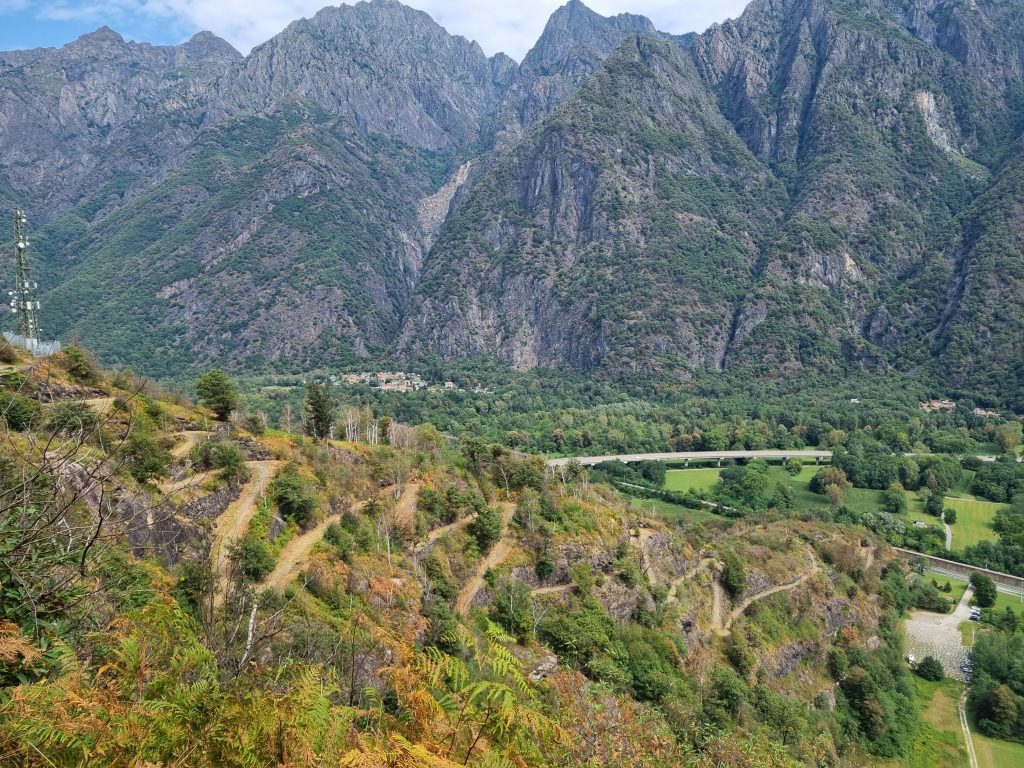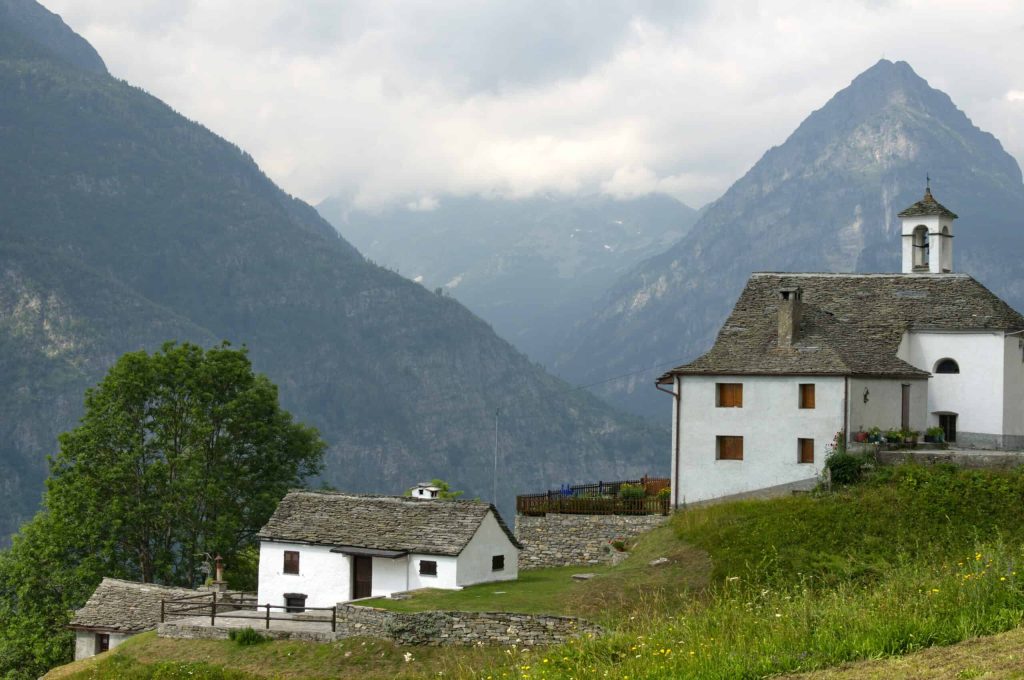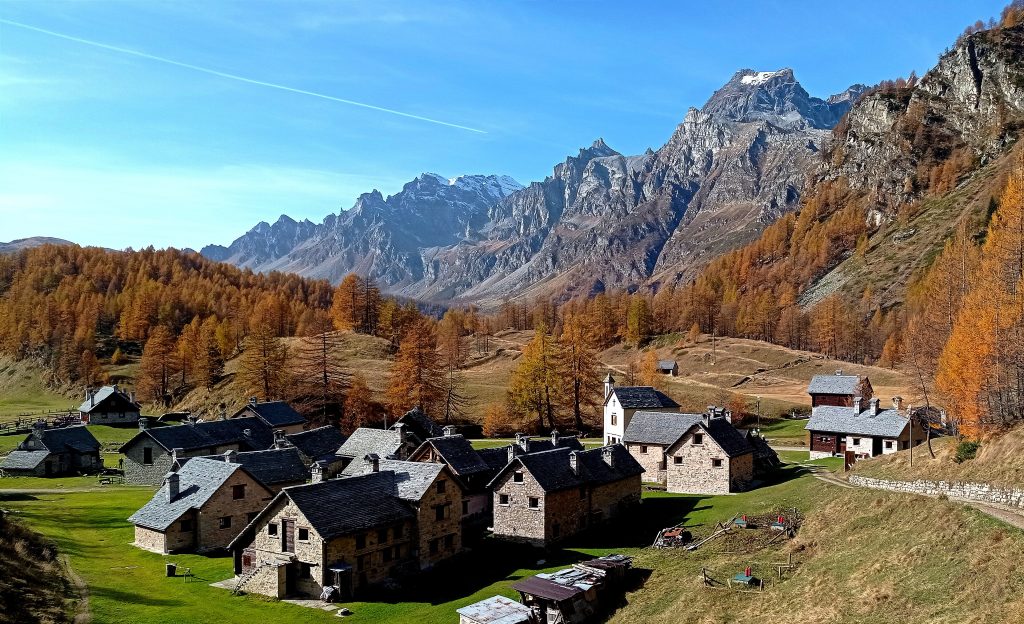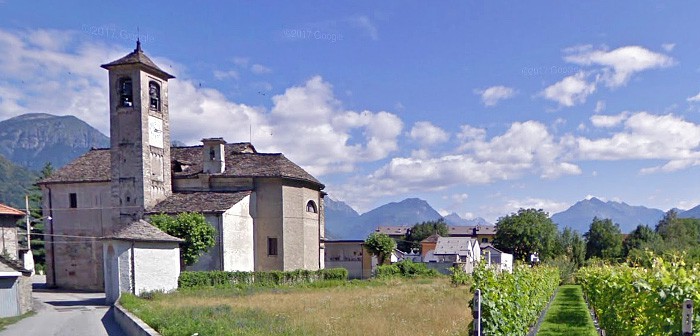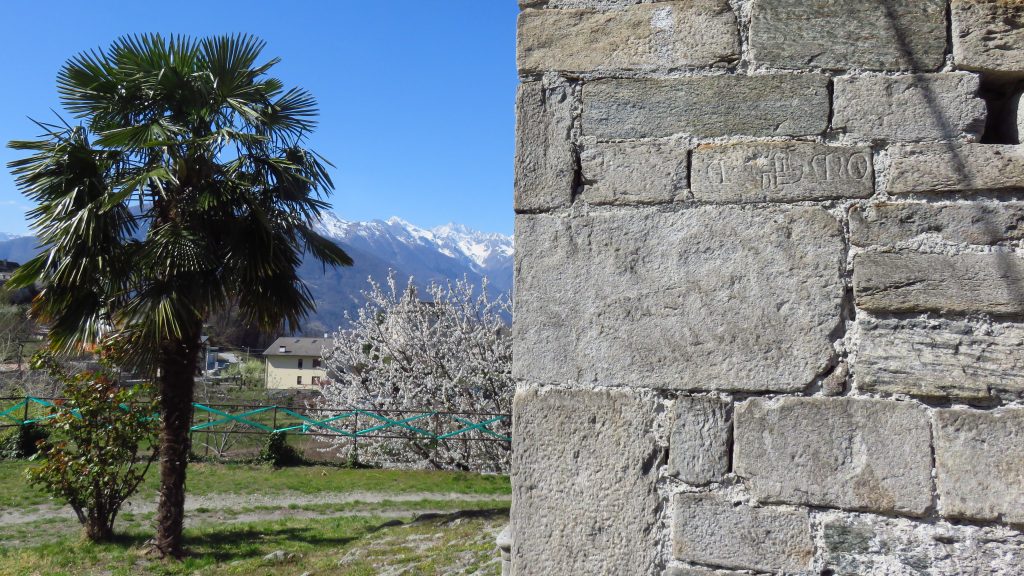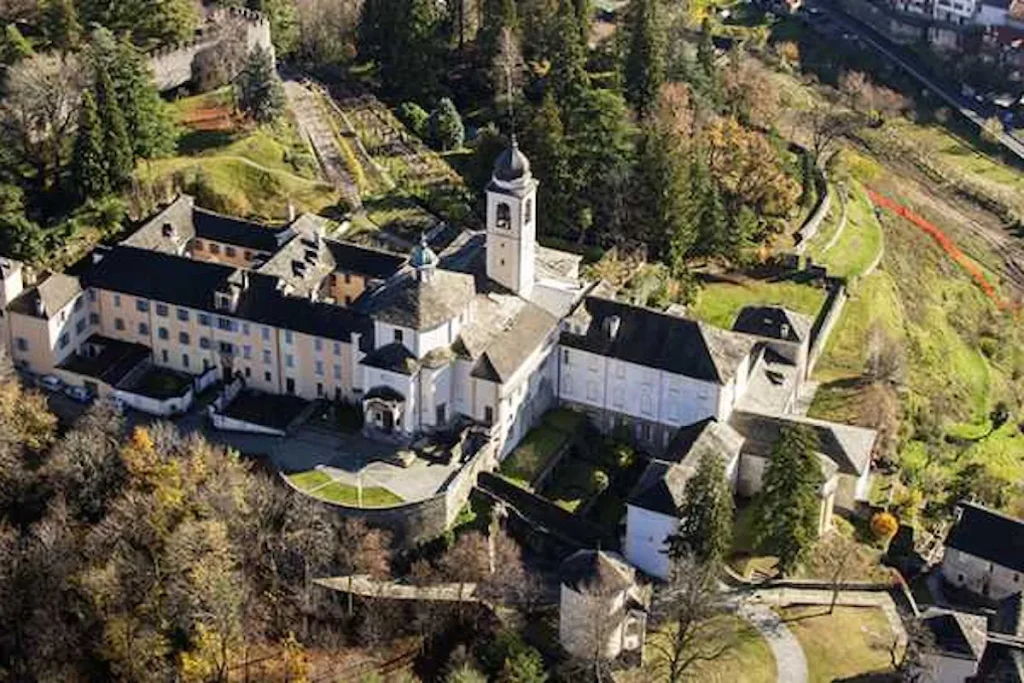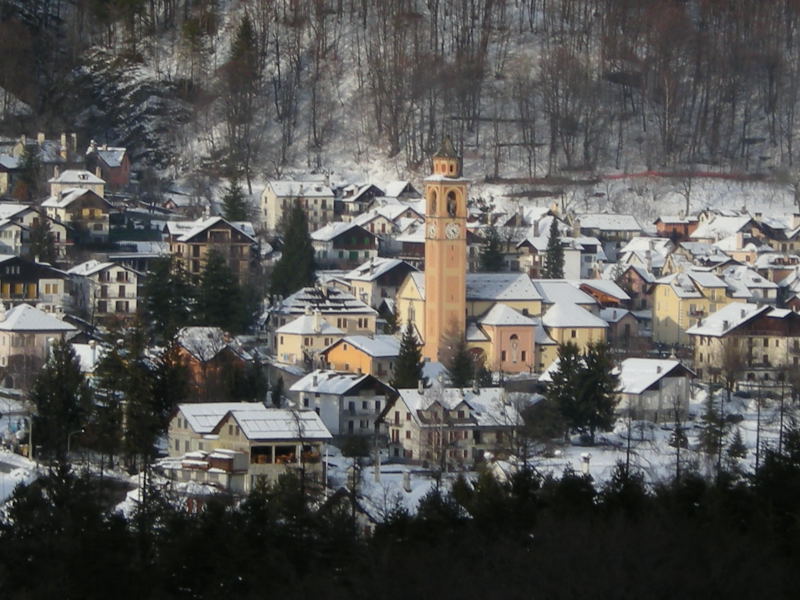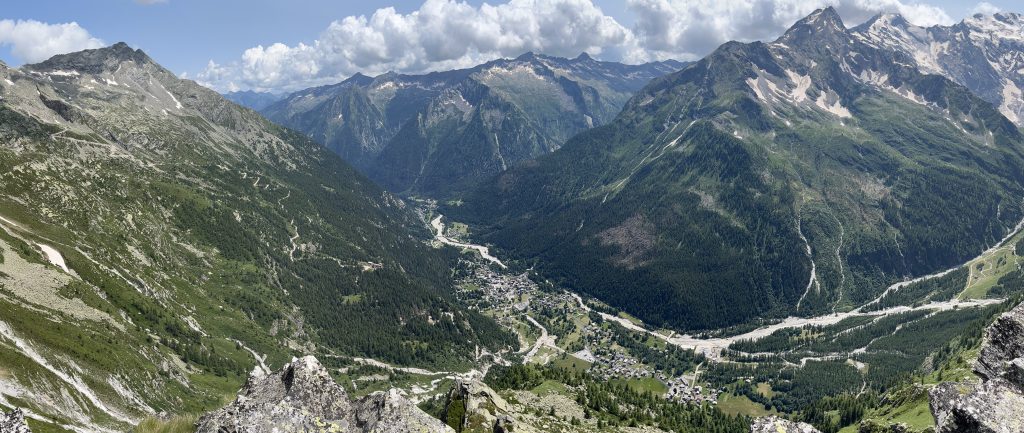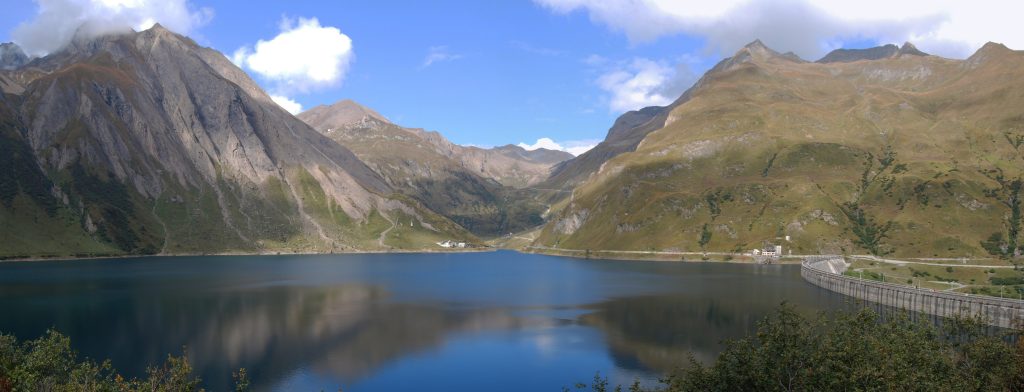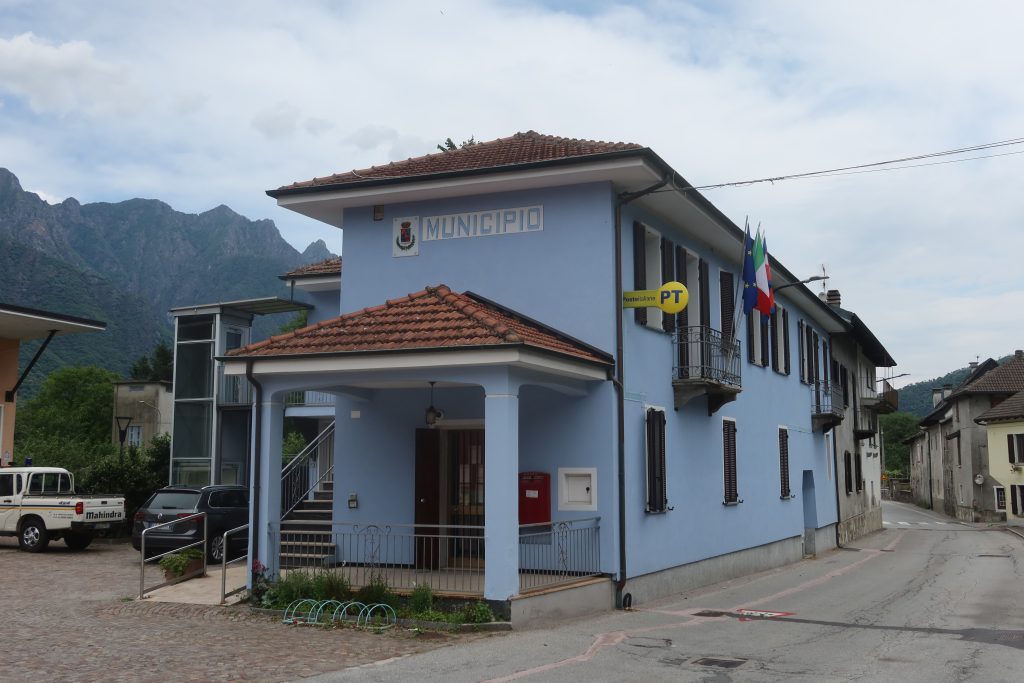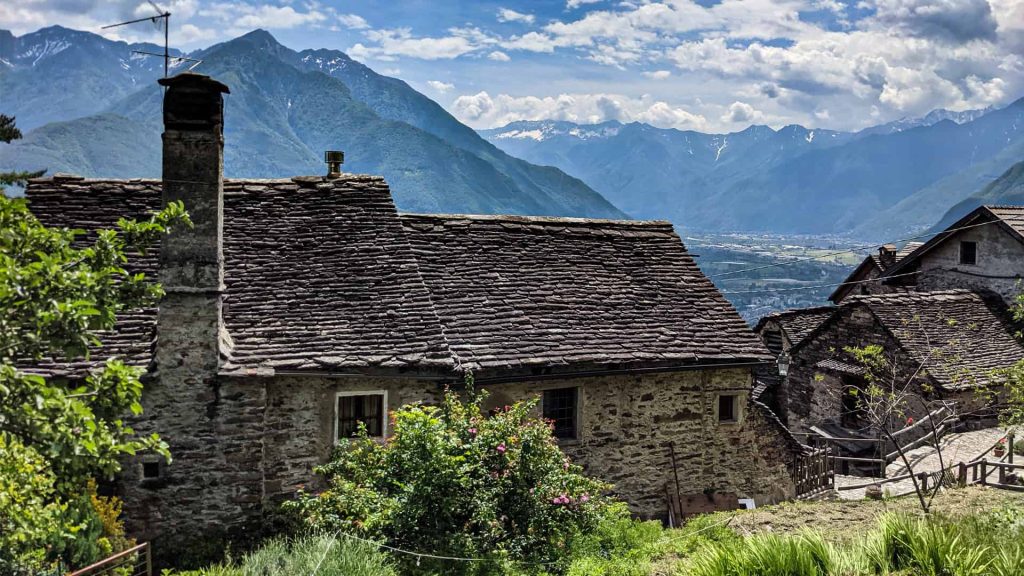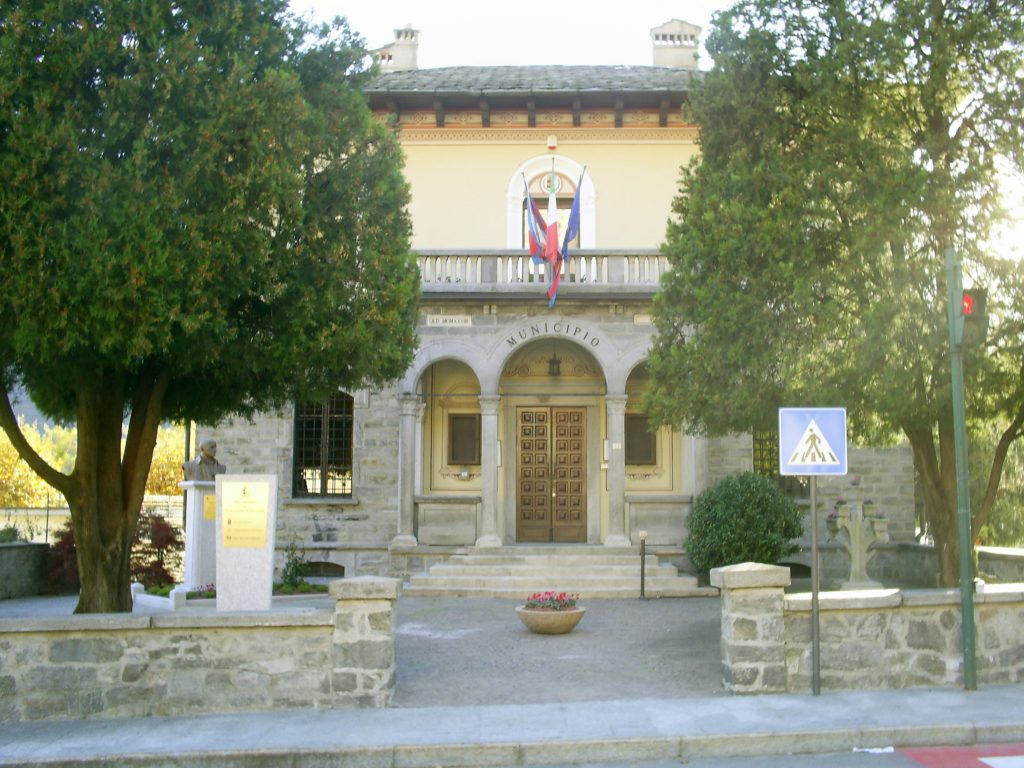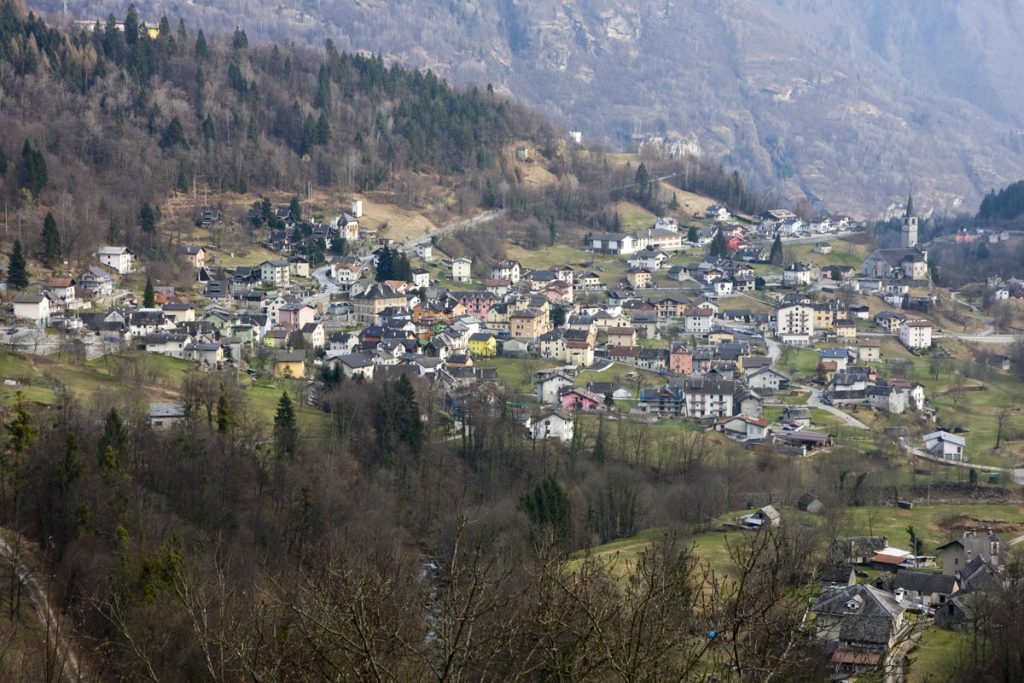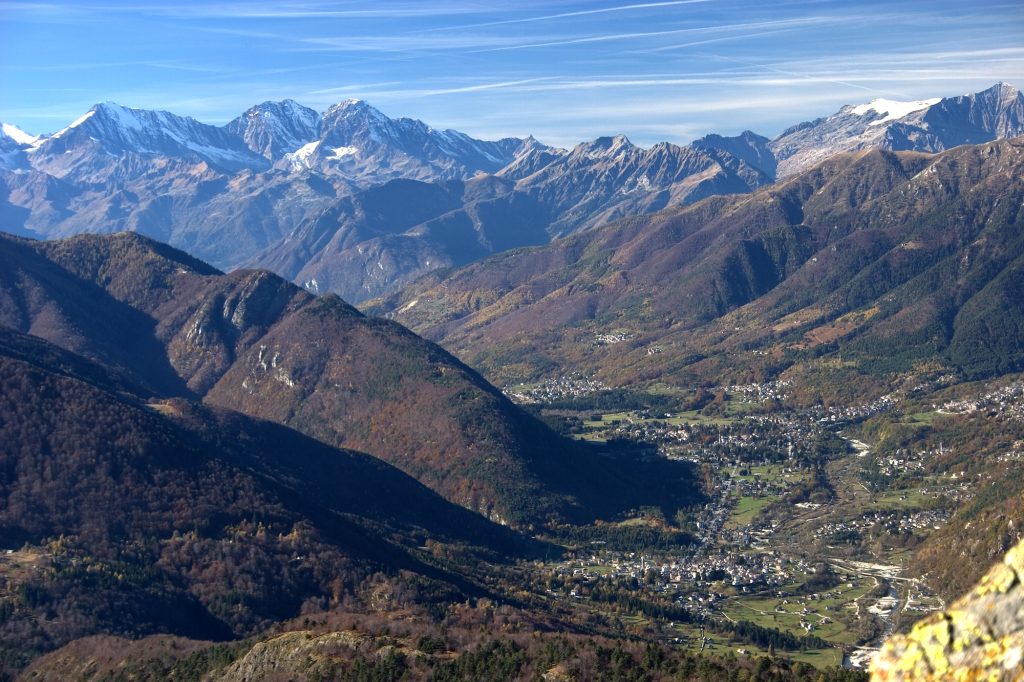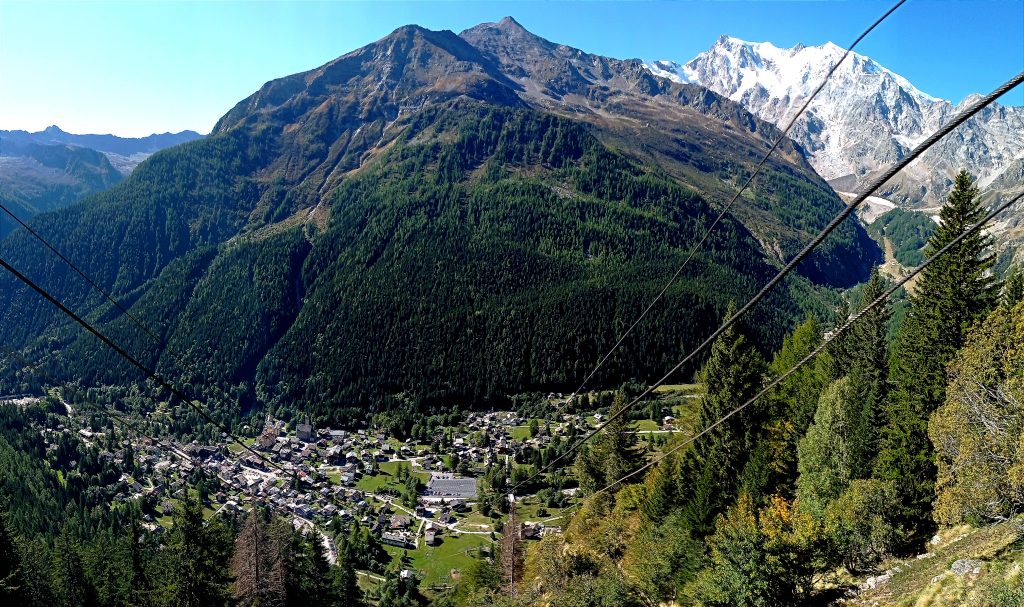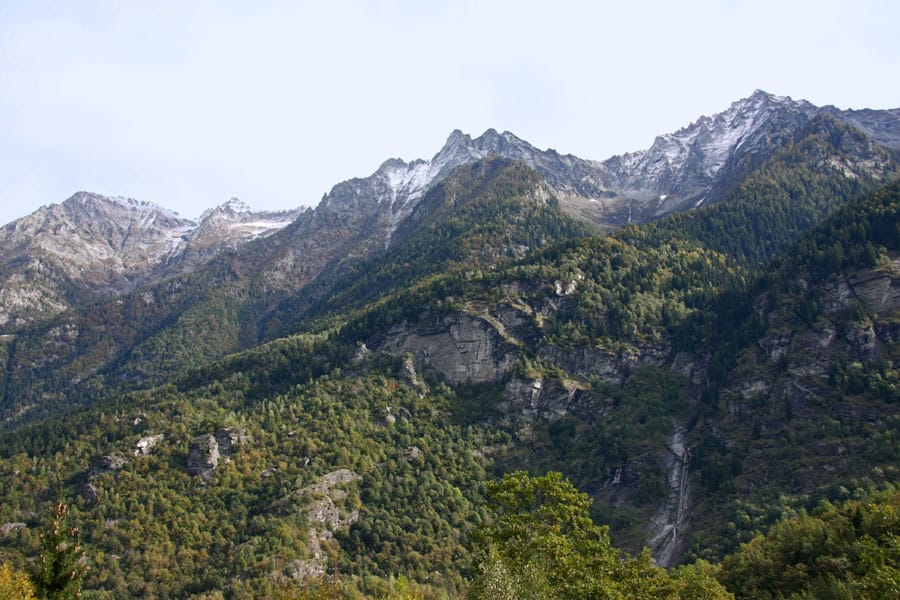
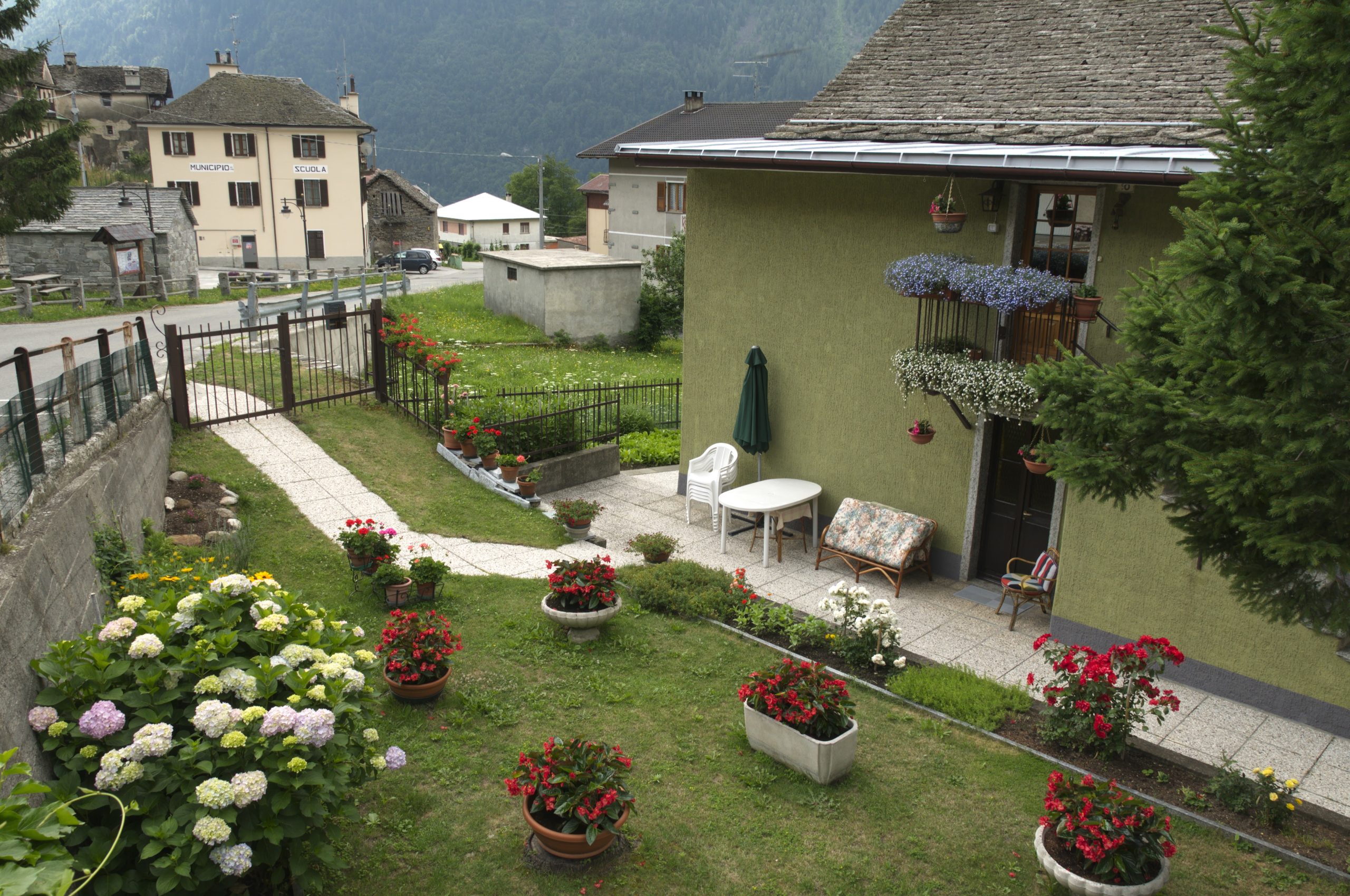
Trasquera is a small Alpine municipality in Valle Divedro, perched at an altitude of 1,096 metres on the slopes of Teggiolo, overlooking the Weissmies massif and the Andolla range. Its name is linked to one of the valley’s most fascinating engineering works: the Devil’s Bridge.
An “impossible” engineering feat
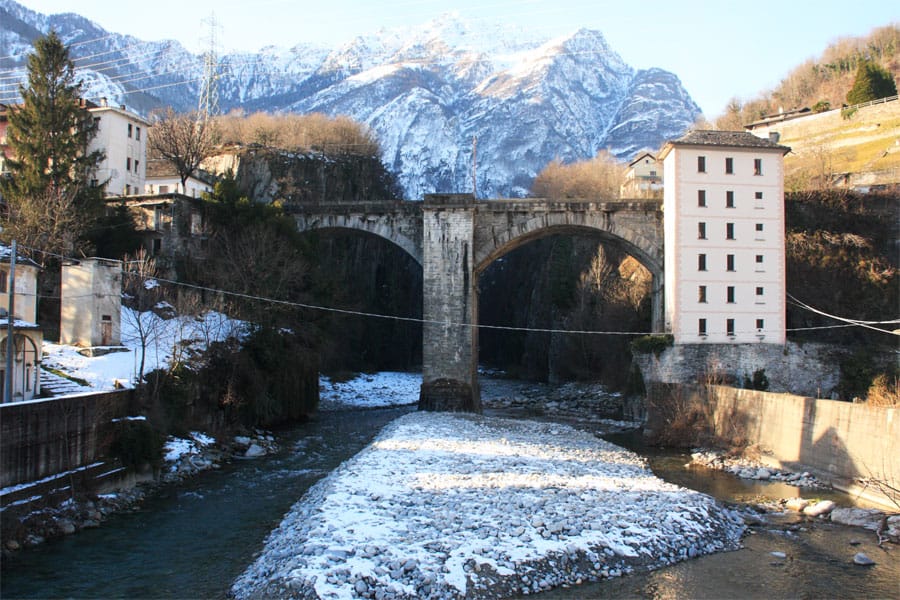
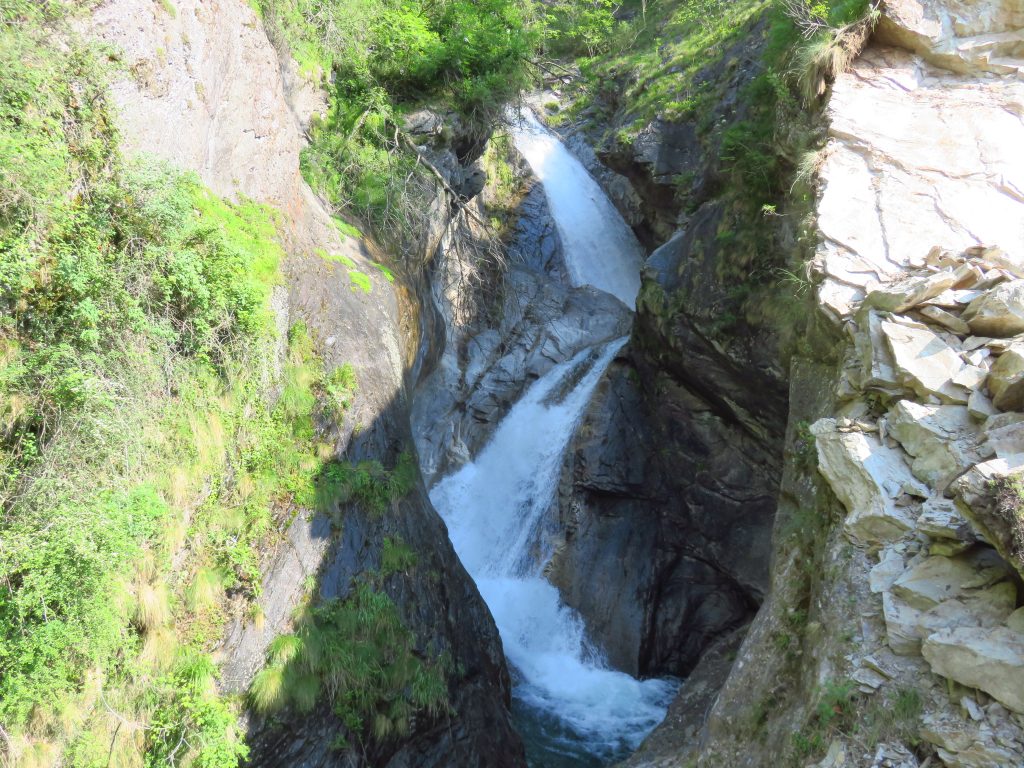
The bridge connects Trasquera with its hamlet of Bugliaga, along a stretch of road with a particularly daring route. Studies for its construction date back to 1874, when the Saglie del Rì were identified as the site for building the crossing. The construction site required more than a hundred larch trunks, arranged along the mountainside as temporary formwork; once the work was completed, they were covered in oil and burned. It was precisely the difficulty of such a spectacular structure for its time that gave rise to the legend that it had been built by the devil himself, hence the name it still bears today.
A village accessible only on foot until 1963
Until 1963, Trasquera could only be reached via a mule track, known as the “veia d’Brocc”: a detail that clearly conveys the isolation and mountain life that characterised this corner of Valle Divedro for centuries.
Trasquera in Valle Divedro
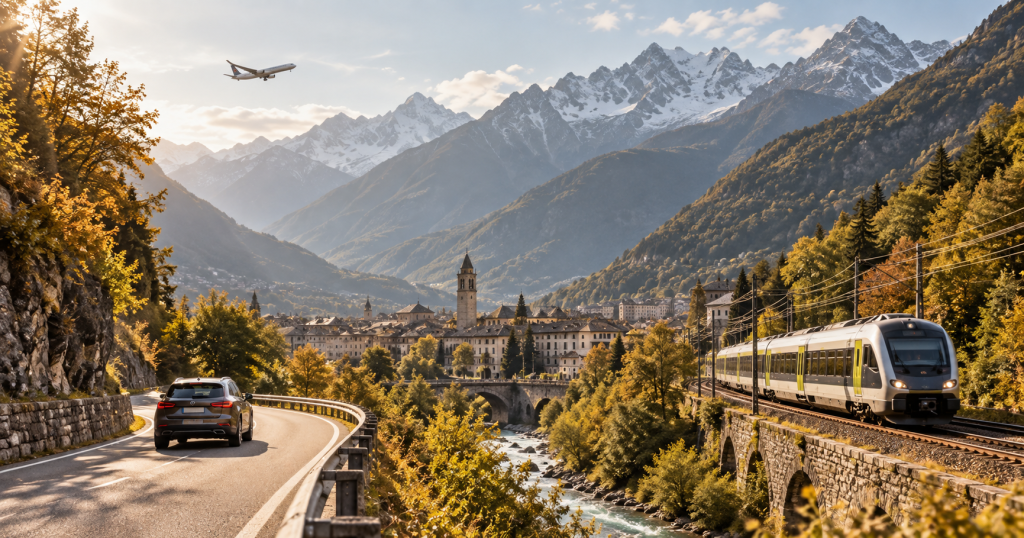
The municipality is part of Valle Divedro, the valley leading towards Alpe Veglia and the Swiss border through the Simplon Tunnel. To learn more about the history and routes linked to the Devil’s Bridge, see the visitOssola page.
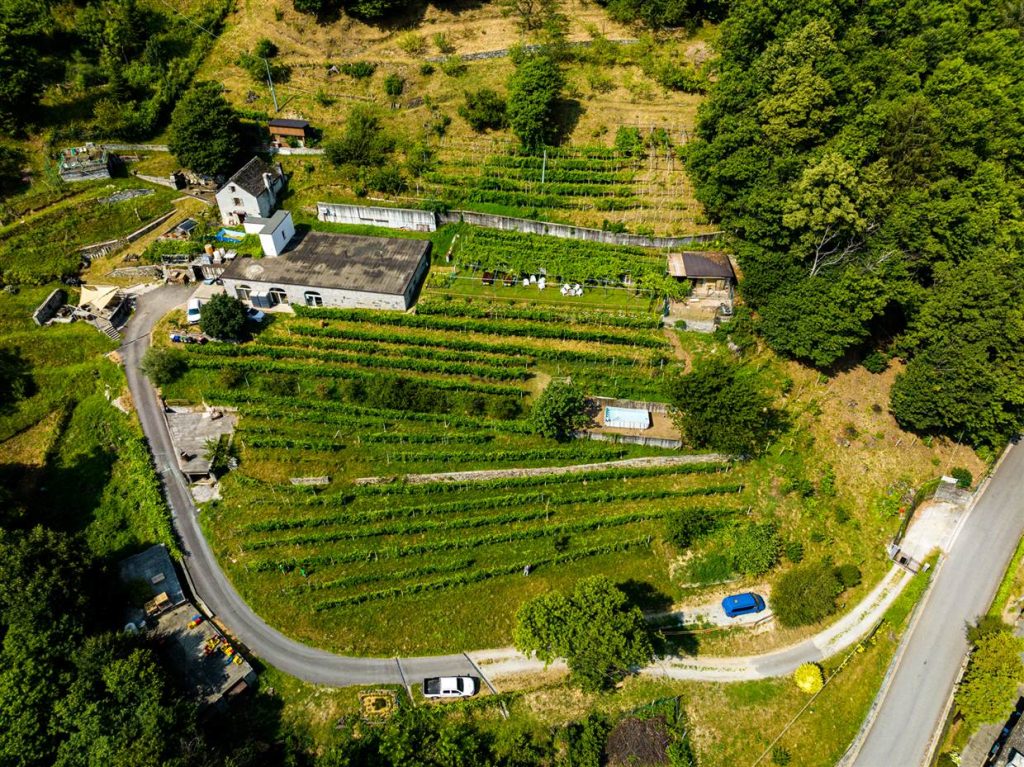
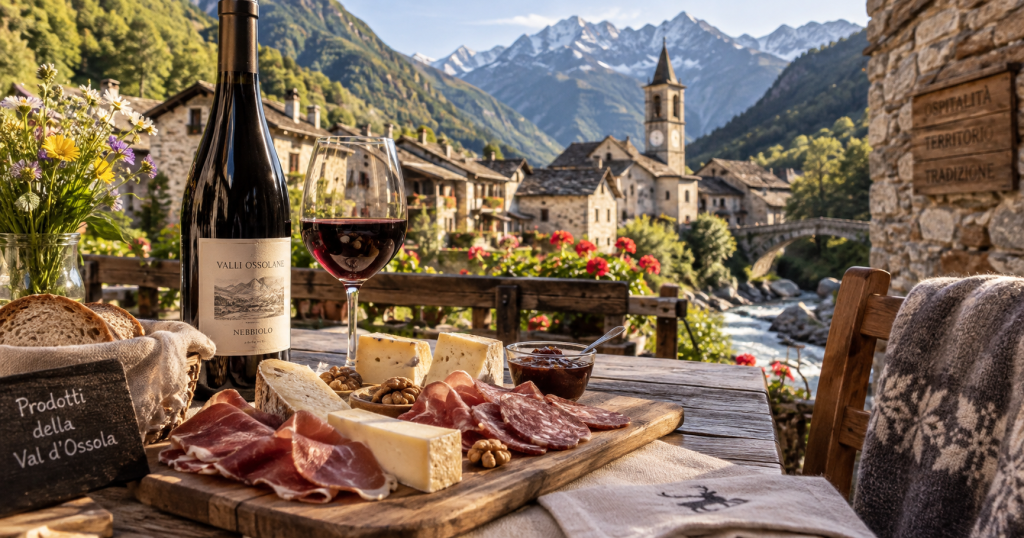
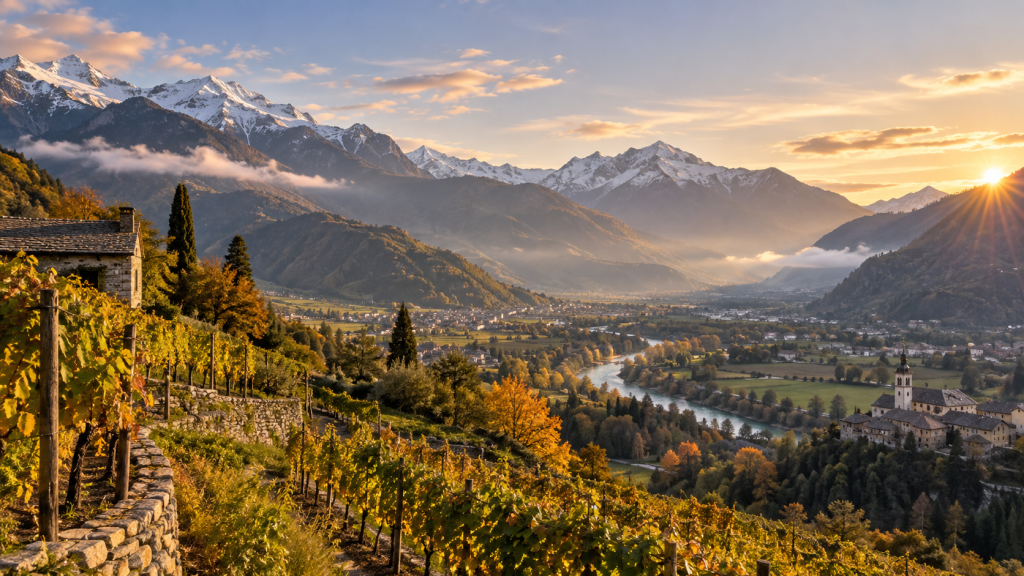
Those visiting Valle Divedro can combine the excursion with a stop further down the valley, among the vineyards of Val d’Ossola, with a tasting to round off the day.
A village shaped by mountain life
Despite its small size, Trasquera continues to maintain a strong identity linked to mountain life, with residents who still practise livestock farming and manage high-altitude pastures during the summer months, keeping alive agricultural practices that have now disappeared elsewhere.
Bugliaga, the hamlet beyond the bridge
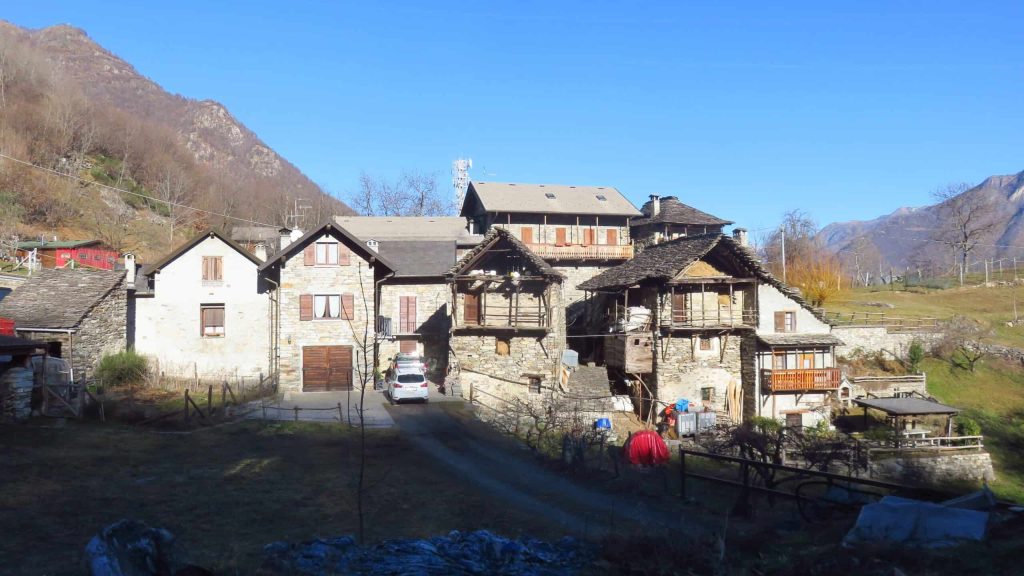
The Devil’s Bridge leads to the hamlet of Bugliaga, a small settlement that has preserved the appearance of an authentic mountain village over time: reaching it by crossing this 19th-century structure remains an experience that makes it possible to tangibly sense the isolation that characterised these places before the road was built.
A symbol of 19th-century engineering courage
The Devil’s Bridge in Trasquera remains a symbol of the engineering courage that characterised the construction of Alpine infrastructure in the 19th century, when the technology available was far removed from that of today, yet human ingenuity still managed to overcome seemingly insurmountable obstacles.
A heritage to be passed on
The preservation of the Devil’s Bridge and Trasquera’s historic structures is an ongoing commitment for the small local administration, which must balance limited resources with the need to safeguard a heritage of historical and tourist importance for the entire valley.
One final curiosity: however fanciful it may be, the legend of the devil builder conveys better than many historical accounts just how extraordinary the construction of this structure was perceived to be at the time.
A bridge, a legend, a piece of Alpine history.
Devil or human ingenuity: the bridge remains extraordinary nonetheless.
A bridge that still defies logic today, and that is why it fascinates.
One final note on the Devil’s Bridge: the legend surrounding it continues to be told to visitors exactly as it was passed down generations ago.
A bridge, a legend, an authentic piece of Ossola.
A bridge, a legend, a piece of authentic Ossola.
The Devil’s Bridge remains one of the most evocative examples of historic Alpine engineering, and Trasquera a natural stopping point for those travelling up Valle Divedro towards the Simplon Tunnel and Switzerland.
Today, the bridge remains a striking passage point for those walking the historic trails of Valle Divedro.