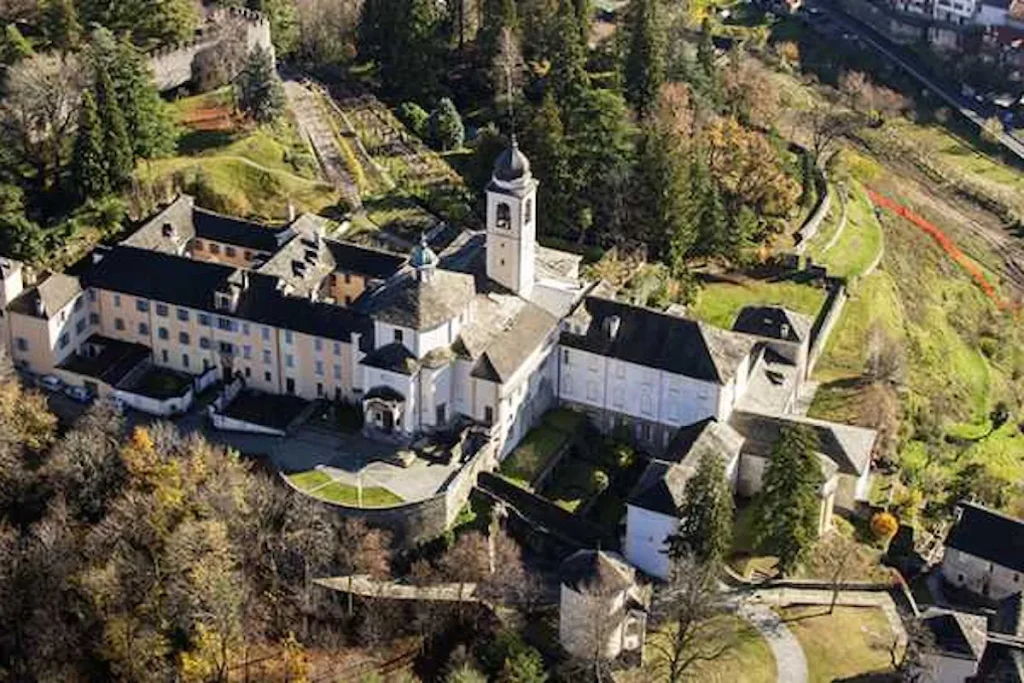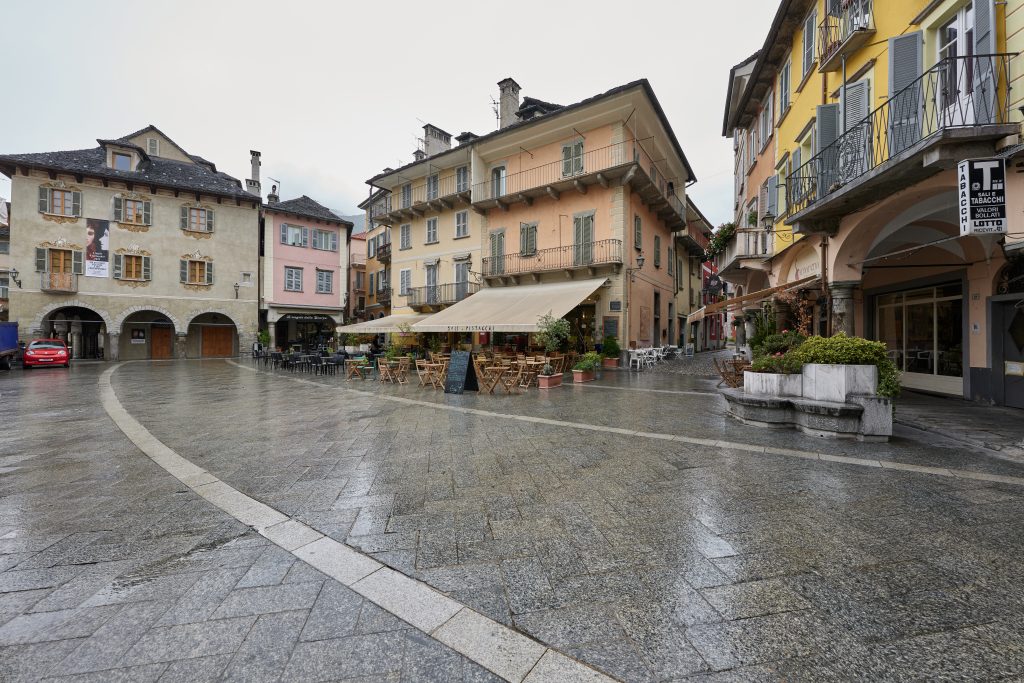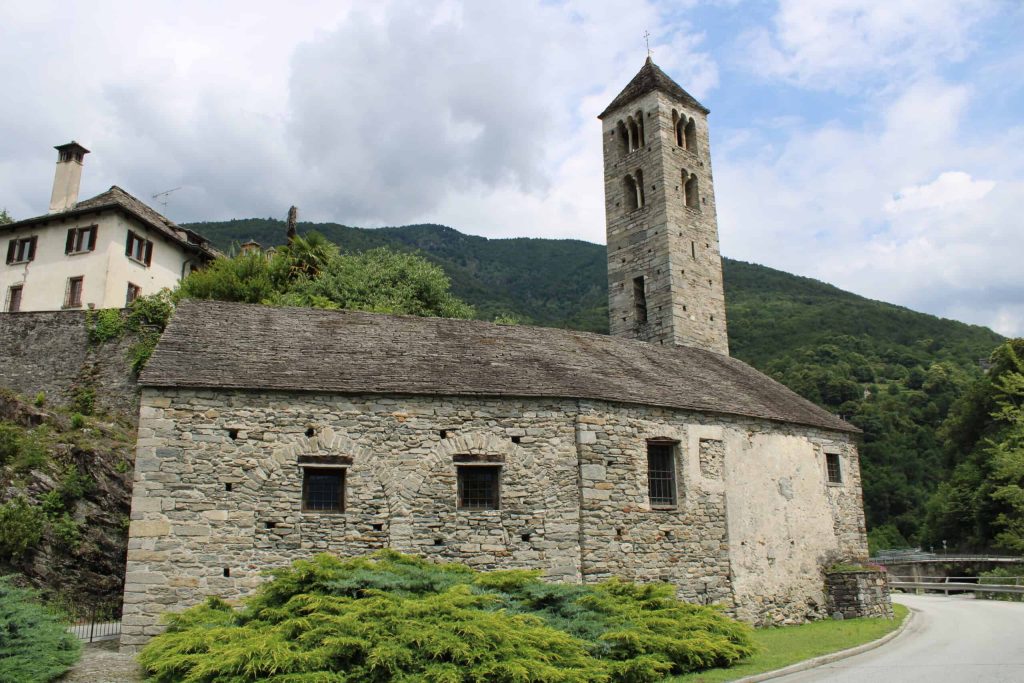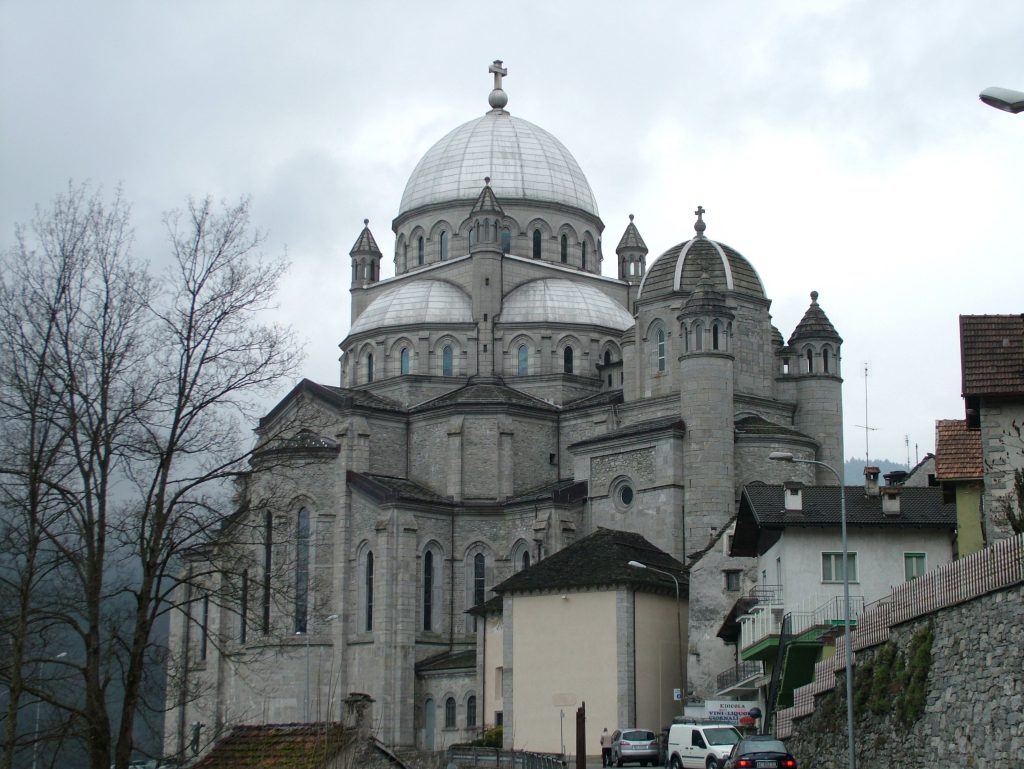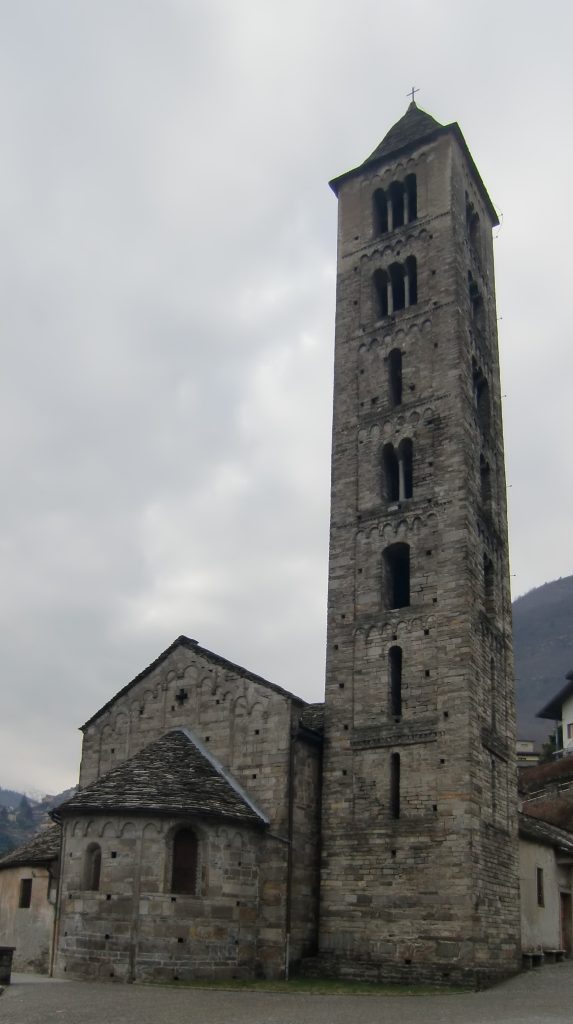
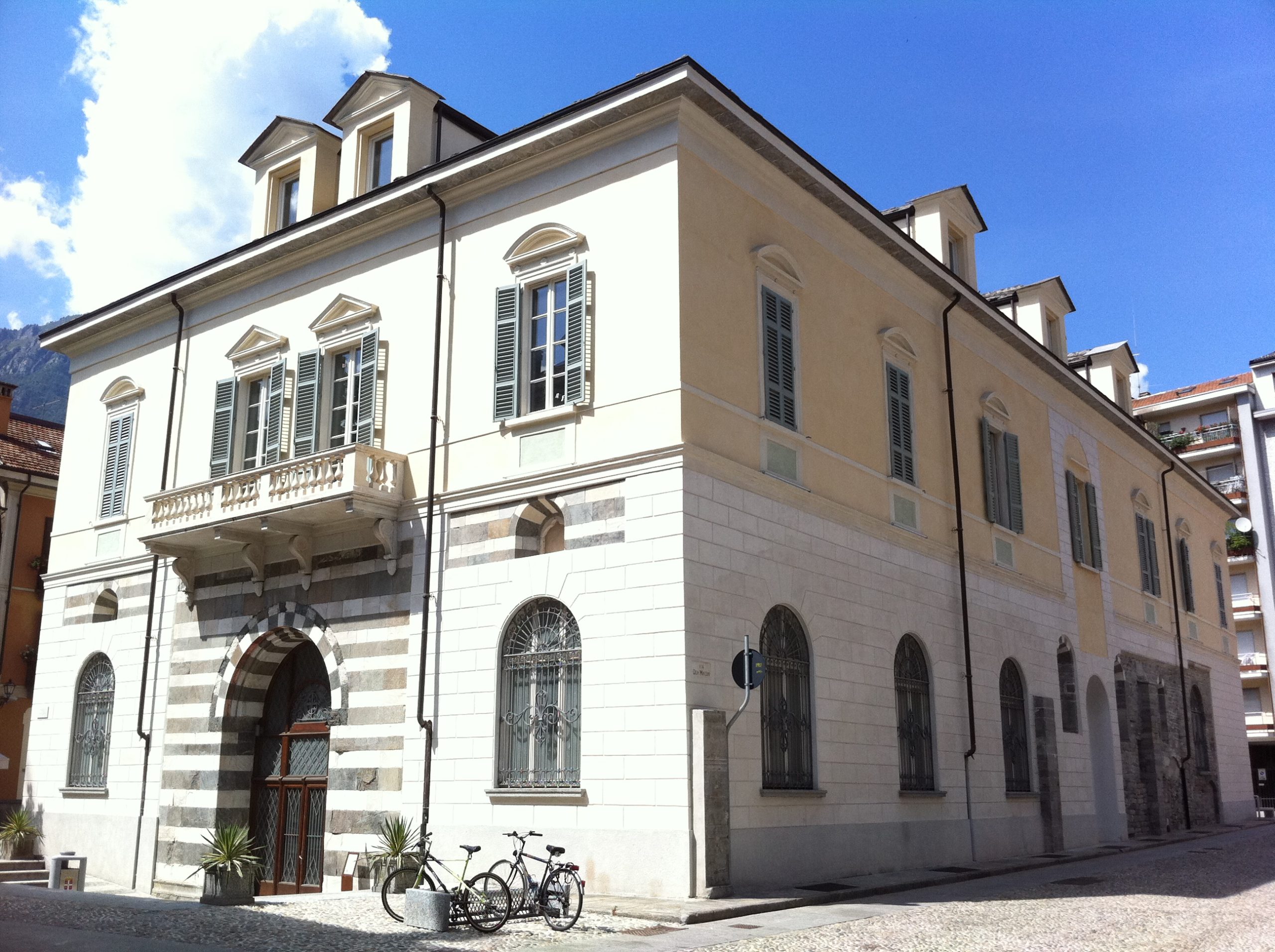
Viewed from the outside, Palazzo San Francesco still reveals, in its forms, the origins of the ancient Franciscan church that has shaped its history since the 13th century.
Traces of the ancient church
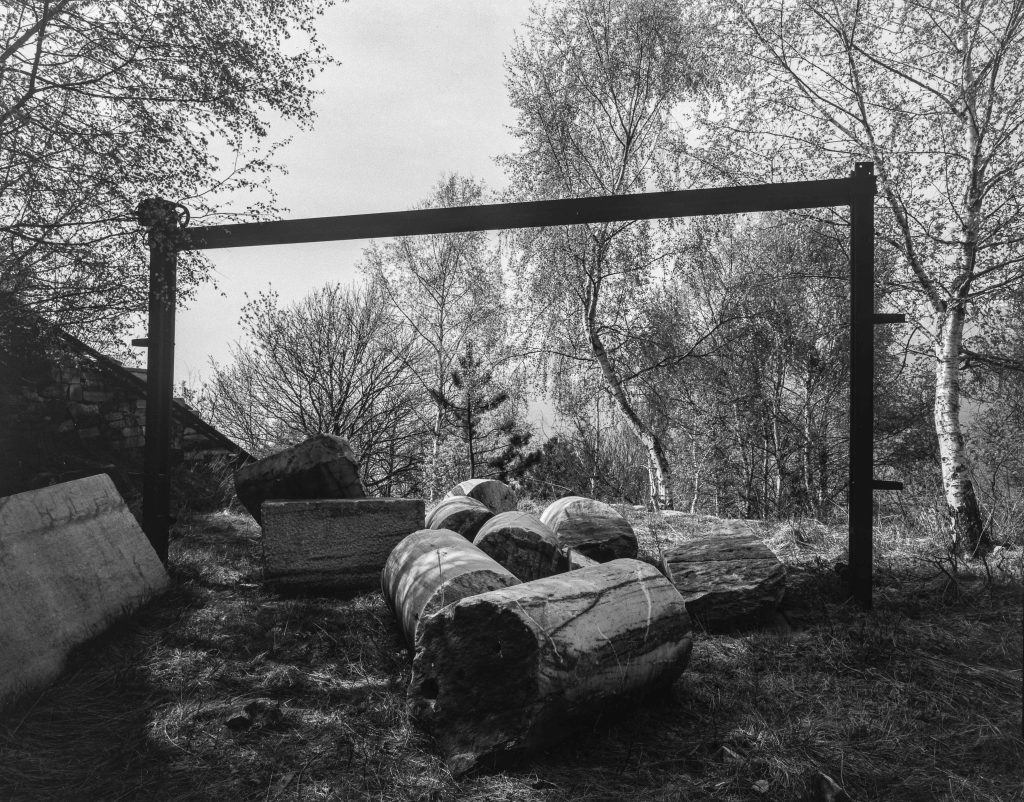
The building was constructed on the plan of an earlier church, dating back to the late 13th century, arranged in three naves defined by twelve serizzo columns. The carved capitals surmounting them depict Eucharistic scenes, sphinxes, grotesque masks and acanthus leaves: a rich decorative repertoire typical of Gothic art applied to Ossolan religious architecture.
Granite columns and pointed arches
The ground floor still preserves the most evident traces of its past as a Franciscan church: the decorated bays, granite columns and pointed arches define a space that, although transformed over the centuries, clearly conveys the original layout of the 14th-century religious building.
A restoration faithful to the original
The restoration work carried out on the palace focused on the conservation of both the exterior façades and the frescoed surfaces and stone materials on the ground floor. The replacement of the external window and door frames was also undertaken while preserving the original aesthetics, in order to retain the building’s historic appearance in the heart of Domodossola’s historic centre.
One palace, two stories to discover
Beyond its architecture, Palazzo San Francesco also preserves a political and cultural history intertwined with the birth of the modern Val d’Ossola, explored in greater detail in the article on Palazzo San Francesco: between wine and church in Domodossola.
The palace is just a few steps from Piazza Mercato: after your visit, the vineyards surrounding Domodossola are only a few minutes away for a tasting.
An ongoing restoration project
The care devoted to Palazzo San Francesco over the decades bears witness to the Domodossola community’s attention to its historic heritage: targeted interventions have made it possible to preserve both the masonry structures and the most fragile decorative details, ensuring that visitors can continue to enjoy the building without it losing its architectural authenticity.
A recognisable symbol of the city
The silhouette of Palazzo San Francesco, with its architectural lines combining Gothic and Renaissance elements, has over time become one of Domodossola’s recognisable symbols, often appearing in photographs and postcards of the city alongside the nearby Piazza Mercato.
An often overlooked detail
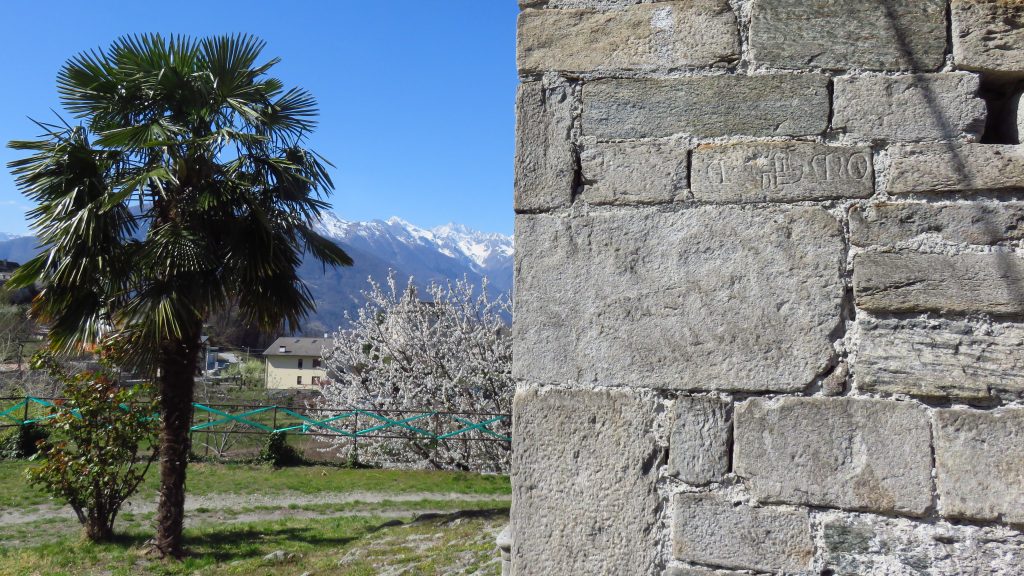
Many visitors arriving in Piazza Convenzione focus mainly on the building’s museum function, overlooking the architectural details of its façade: a closer look, however, reveals sculptural features of great refinement, testament to the craftsmanship of the period in which it was created.
An invitation to take a closer look
To fully appreciate the architectural details described, it is worth spending a few extra minutes observing the façade up close, perhaps with the help of a local guide able to explain the details that are less obvious at first glance.
A symbol photographed for generations
For decades, Palazzo San Francesco has appeared in postcards, paintings and photographs of Domodossola, becoming one of the most frequently depicted subjects by local artists wishing to capture the city’s historic face: a sign of how deeply the building has become part of the city’s collective imagination.
An architectural detail that deserves more than a passing glance.
Stone by stone, centuries of history carved into the façade.
Stone after stone, a façade that tells centuries of history.
One final observation: preserving architectural details of this calibre in such an ancient building represents a small miracle of consistent maintenance over time.
One façade, centuries of history carved in stone.
Stone by stone, history carved into the façade.
Palazzo San Francesco remains one of the most significant architectural landmarks of the historic centre, a building worth pausing at for anyone walking through the streets of the old quarter to discover the city’s history.
The historic façade of Palazzo San Francesco remains a visual landmark for those walking through the town centre.