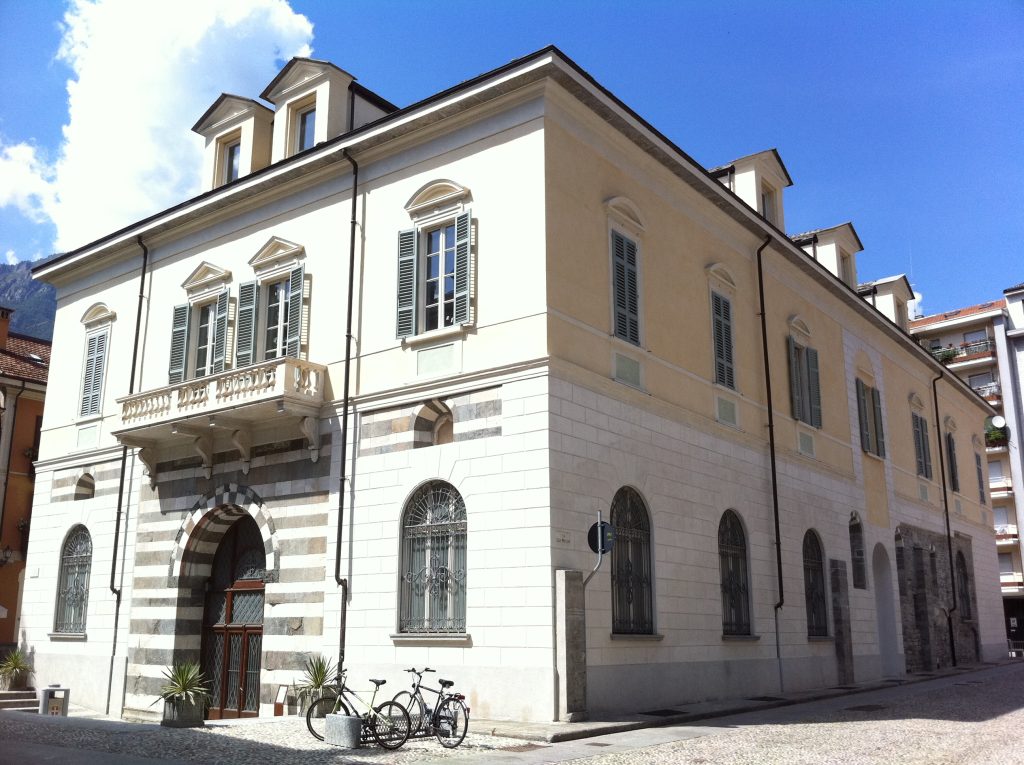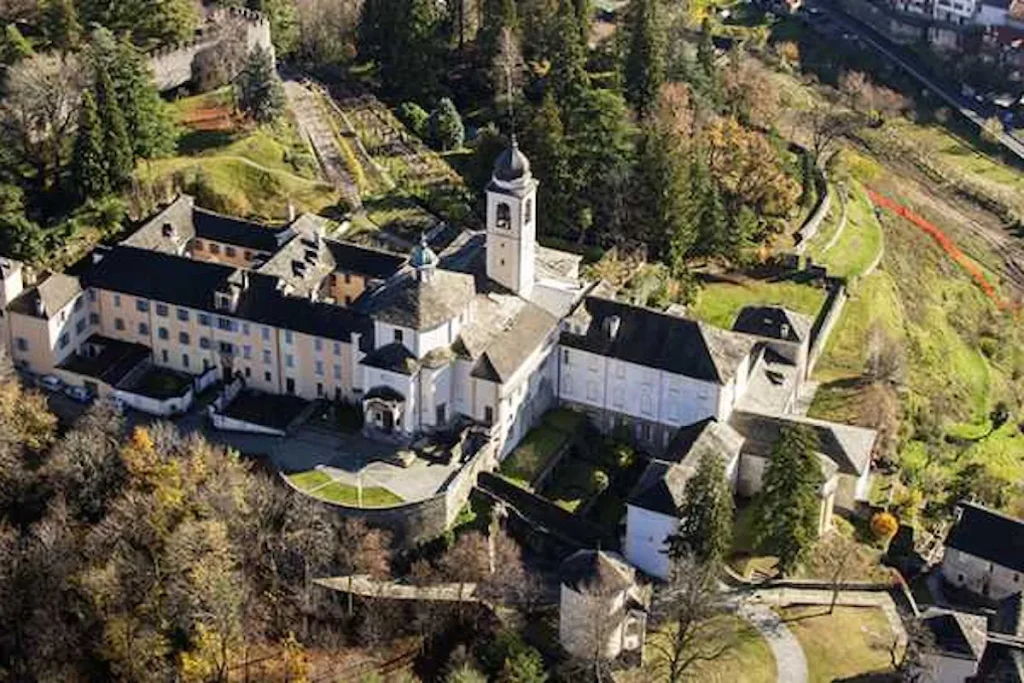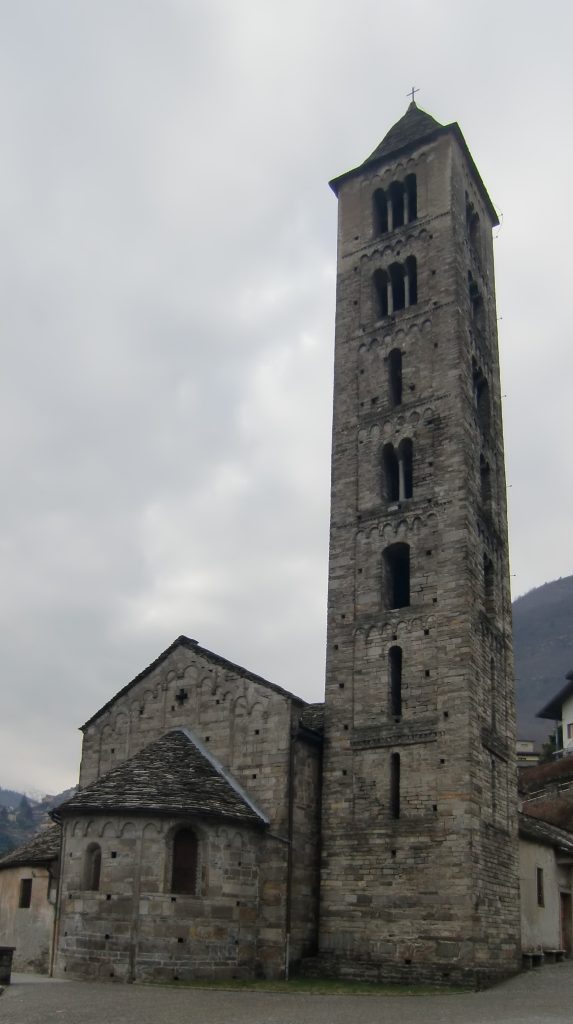
Palazzo San Francesco, in the heart of Domodossola’s historic centre, is now home to the Gian Giacomo Galletti Civic Museums, but its history has its roots in a 13th-century church dedicated to the saint of Assisi.
From a 14th-century church to a civic palace
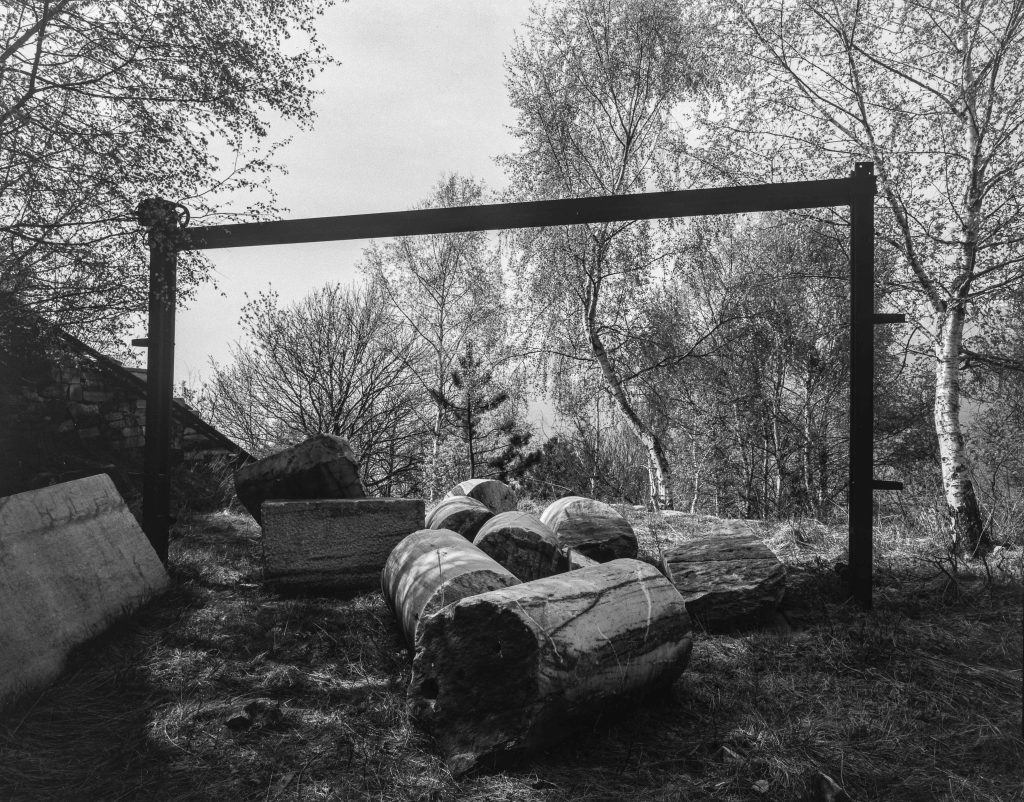
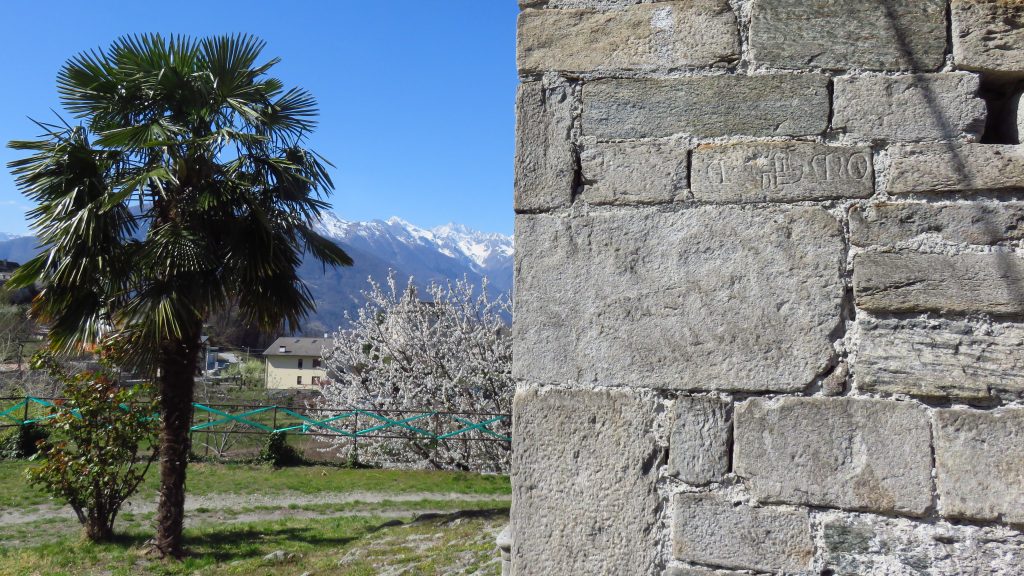
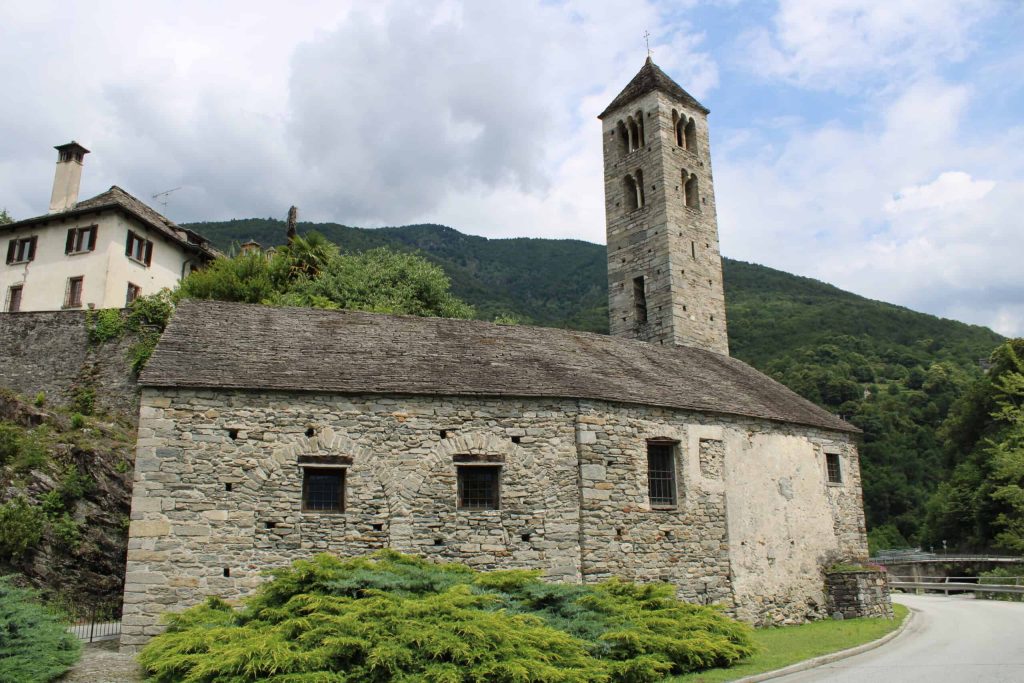
The building stands on the site of an earlier church, dating back to the late 13th century and dedicated to Saint Francis. The church, which had an adjoining convent, had three naves marked by twelve serizzo stone columns with carved capitals depicting Eucharistic scenes, sphinxes, masks and acanthus leaves.
The site of the dedication to the Visconti
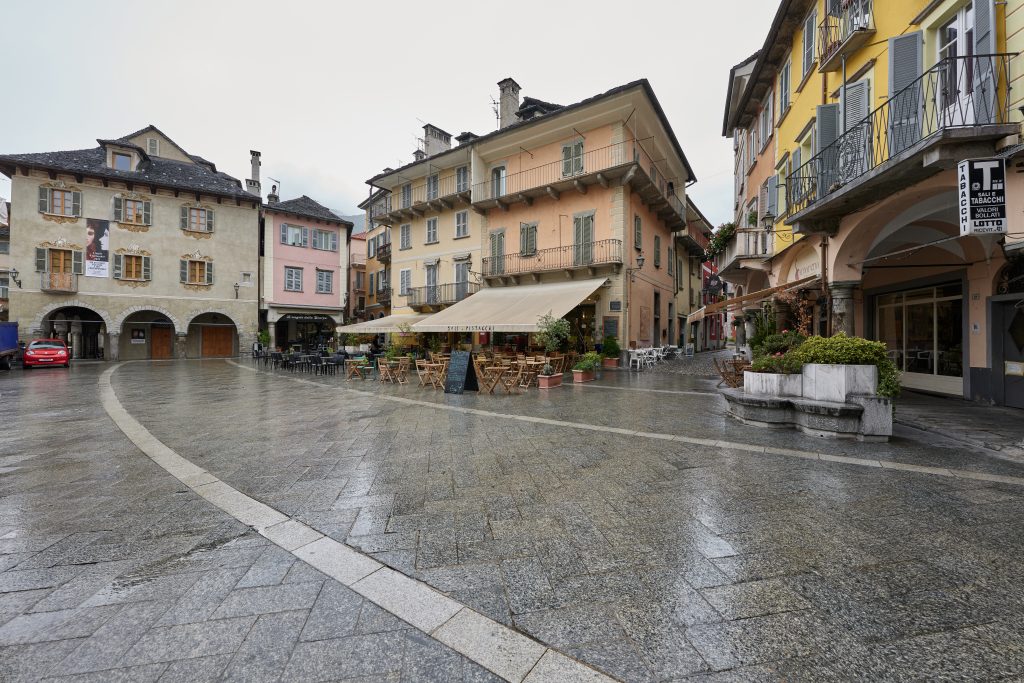
Four provincial councils were held in the convent between the 15th and 16th centuries, and on 19 March 1381 the act of dedication of the people of Ossola to the Visconti was signed there: a key moment in the valley’s political history, so much so that the municipality named the square in front of the church façade “Convention Square”, a name it still bears today.
From Napoleonic state property to civic museum
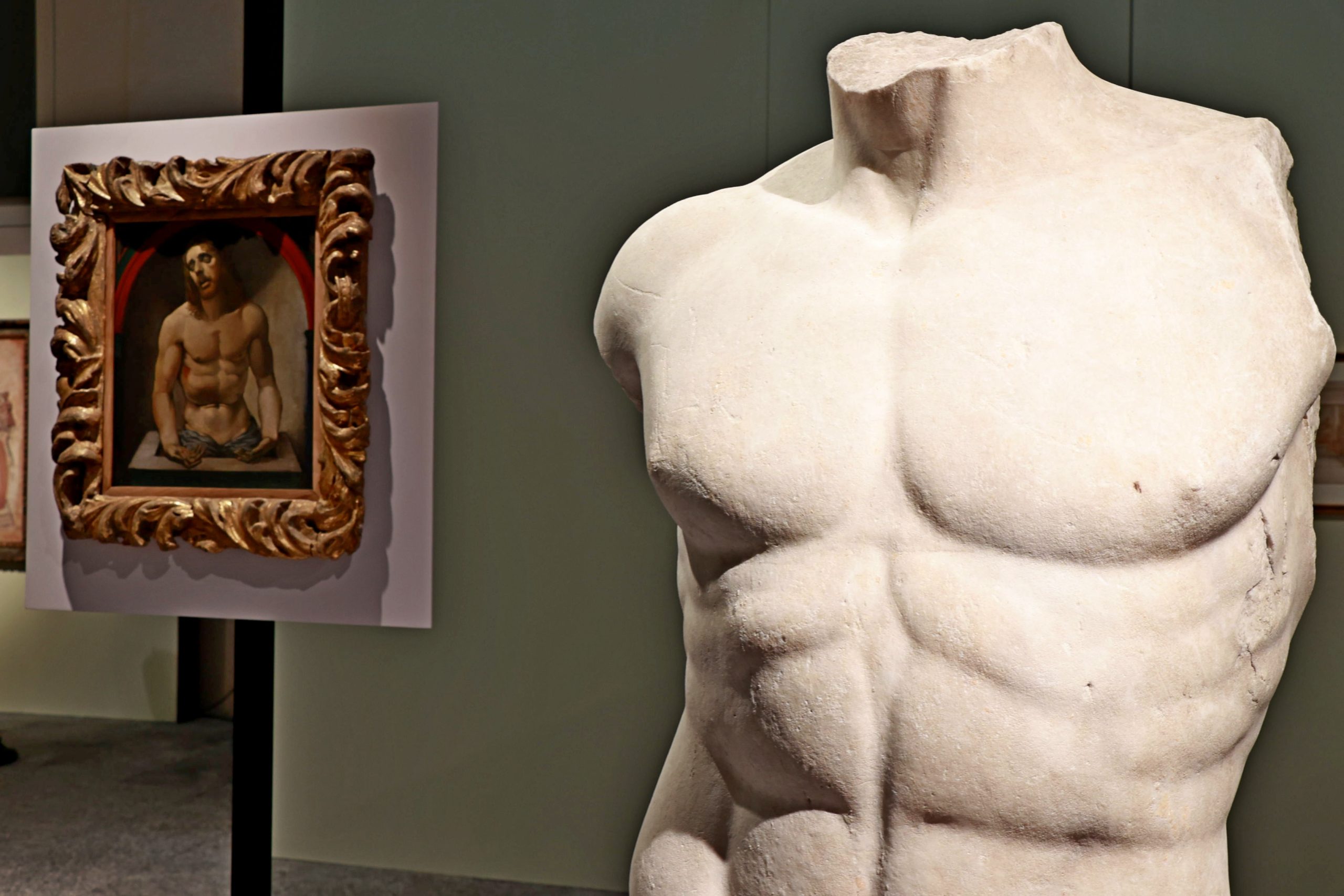
The political and cultural upheavals linked to the founding of the Napoleonic Kingdom of Italy led to the church becoming state property. In 1986, with the dissolution of the Gian Giacomo Galletti Foundation, the palace finally became the property of the Municipality of Domodossola. After years of restoration work, the ground floor, with frescoes from the ancient church dating between the 14th and 16th centuries, became home to permanent and temporary exhibitions. Since 2011, a section of the palace has also housed the Vigezzo civic art gallery, with works including those by Giuseppe Rossetti.
Palazzo San Francesco in the heart of Domodossola
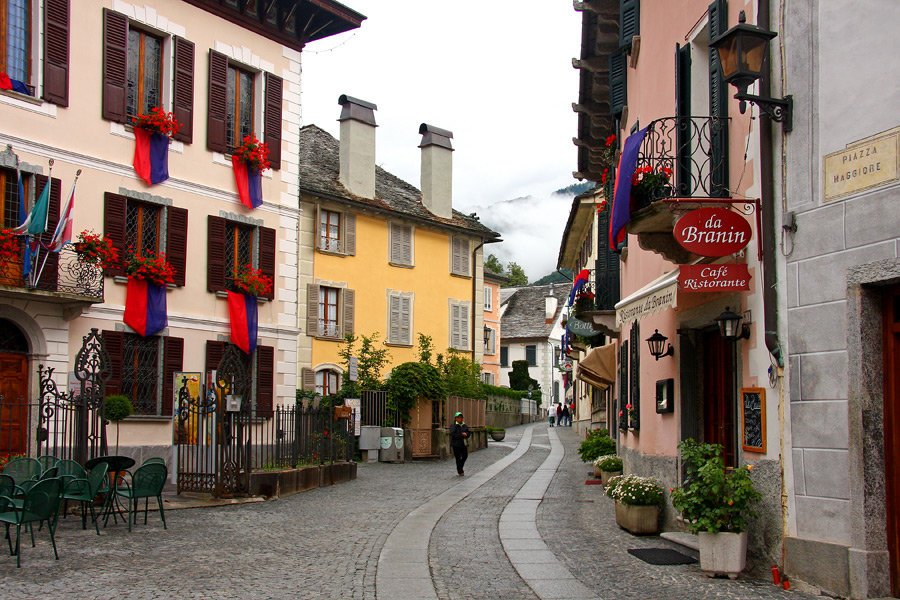
The palace overlooks the historic centre, just a few steps from Market Square. To find out more about the museum’s history and opening hours, see the visitOssola listing.
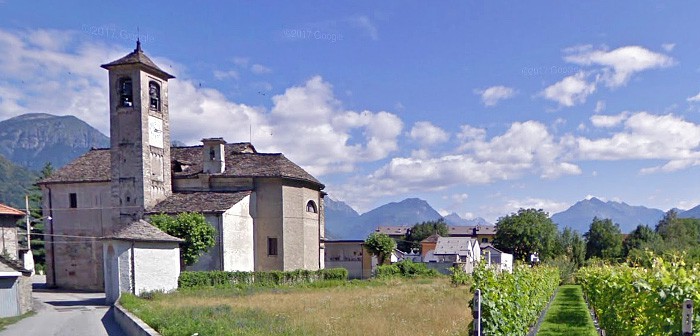
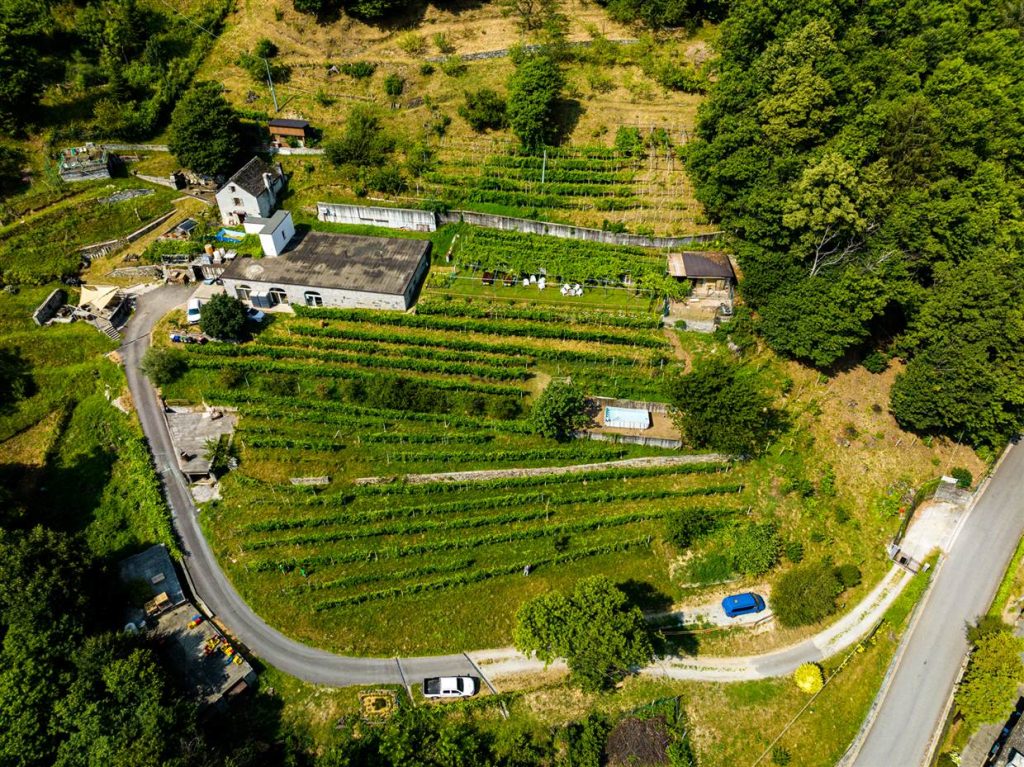
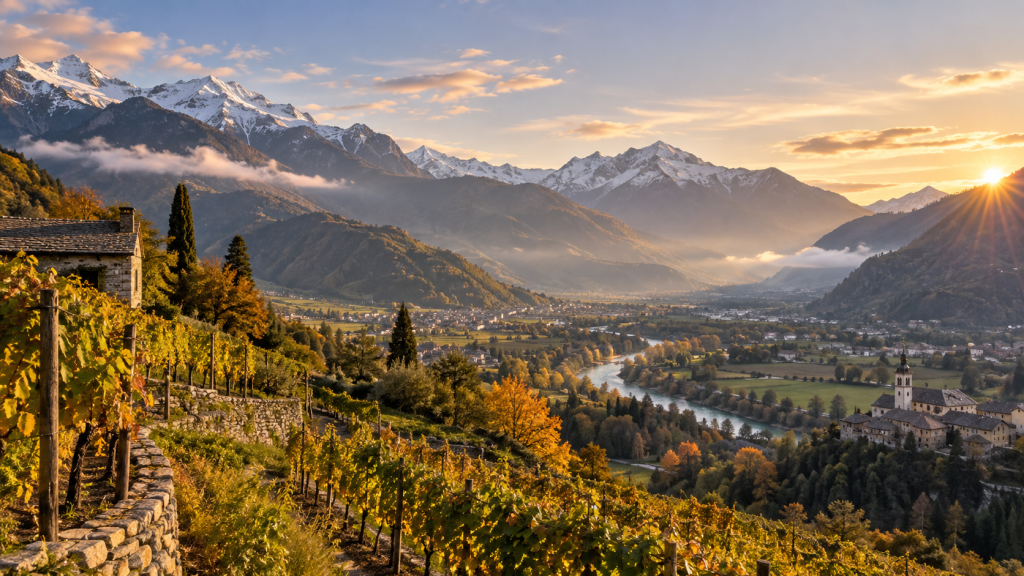
After visiting the museum, the vineyards surrounding Domodossola are just a few minutes away: an opportunity for a tasting between art and wine.
A building that tells the story of several eras
Walking through the rooms of Palazzo San Francesco today means ideally crossing seven centuries of Ossola history: from the serizzo stone columns of the 14th-century church to the Renaissance frescoes, and on to the civic collections that tell the story of the valley’s art and everyday life in the centuries that followed. Few buildings in the Val d’Ossola manage to bring together so many different eras in a single space open to visitors.
Domodossola between the Lepontii and the Visconti
Domodossola was founded in the pre-Roman period by the Lepontii, who gave it the name Oscella, and came under Roman rule in 12 BC, becoming a transit point along the Roman road linking Milan to Lake Maggiore. From the beginning of the 10th century, the area became part of the “comitatulus Oxulensis”, falling under the influence of the bishops of Novara. In the 13th century, tensions began between the local population and the bishops, with the Visconti repeatedly attempting to annex Ossola to their domains, until Gian Galeazzo Visconti finally succeeded in annexing Domodossola in 1381, the very year in which the act of dedication was signed at the convent of San Francesco.
The Swiss occupation and the division of Ossola
In 1410, troops from Valais occupied the whole of Upper Ossola, forcing its inhabitants to swear allegiance to the Twelve Cantons. To free themselves from Swiss rule, the population submitted in 1411 to Amadeus VIII of Savoy, who the following year reached an agreement with Filippo Maria Visconti to cede Lower Ossola to him while retaining Upper Ossola for himself: an episode that still explains the historic distinction between the two parts of the valley.
Knowing these two events, the dedication to the Visconti and the subsequent division of Ossola, helps us better understand why Palazzo San Francesco is considered a symbolic place not only for the religious history, but also for the political history of the entire valley.
One final detail: the close proximity between the palace and the vineyards surrounding Domodossola is no coincidence, but tells of an ancient connection between faith, political power and agricultural economy that has always characterised this area.