The Prünent tasting is an encounter with a distinctive expression of Nebbiolo grown in the Val d’Ossola. In the glass, this wine invites you to recognise its garnet colour, hints of dark fruit, toasted nuances and a tannin that combines structure and elegance. No complicated formulas are needed to read it correctly: a suitable glass, a little time and an orderly approach through sight, smell and taste are enough.
In this guide, we use Edoardo Patrone’s Prünent Stella Valli Ossolane DOC Nebbiolo as a reference, vinified as a red wine and aged in French oak barriques. The aim is not to establish an absolute judgement, but to learn to observe how the grape variety, winemaking, oak and evolution in the glass contribute to the character of the wine.
Prünent tasting: how to prepare the wine and glass
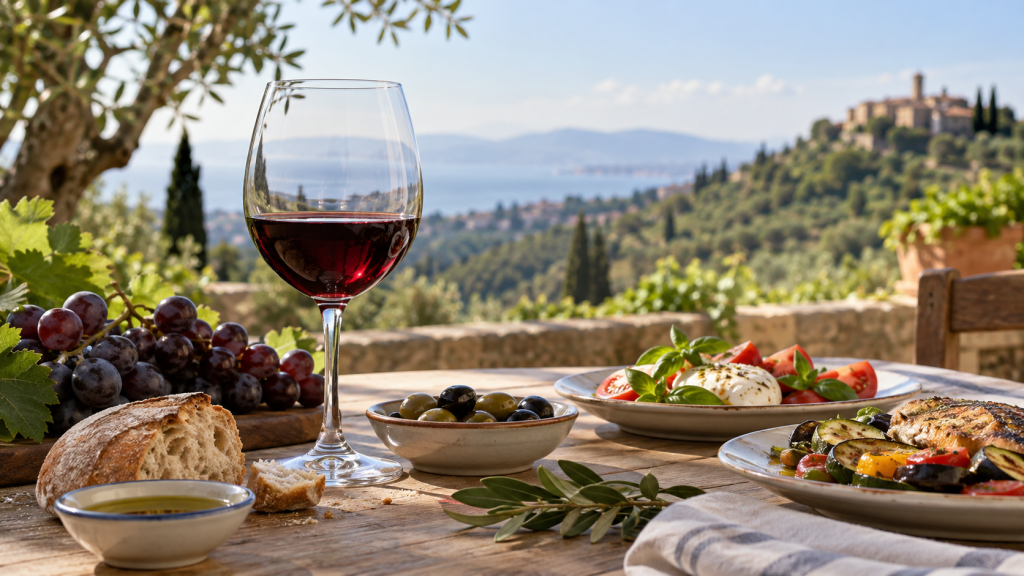
A large glass, with a bowl that narrows slightly towards the top, helps gather the aromas and gives the wine space when swirled. The glass must be clean, free from detergent odours and filled no more than one-third full.
The serving temperature indicated by the producer for Prünent Stella is 20 °C. If the room is very warm, it is best to avoid leaving the bottle near heat sources for too long: an excessive temperature can make the alcohol more noticeable and reduce aromatic precision.
After pouring the wine, observe it and taste it once without swirling it too much. Then return to the glass after a few minutes. This comparison allows you to follow the opening of the aromas and understand how oxygenation changes the perception of fruit, spicy notes and tannin.
The colour: reading Prünent with your eyes
Tilt the glass over a white surface and observe both the centre and the rim. The Prünent Stella fact sheet describes a garnet colour, a hue closely associated with the visual identity of many Nebbiolo wines.
At the heart of the glass, the colour may appear more concentrated, while towards the rim it becomes more transparent. This variation is not a flaw: it is one of the elements to be read alongside the vintage, ageing and time spent in bottle. However, avoid inferring the wine’s age from colour alone. Visual assessment gains meaning when compared with aromas, freshness and texture on the palate.
Prünent aromas: from fruit to oak notes
Initially, bring your nose close to the still glass. Look for the most immediate sensations, then swirl the wine gently and smell it again. The producer’s description of Prünent Stella refers to dried plum and morello cherry, accompanied by notes of smoke, toasted bread, tobacco and grass.
To make the analysis simpler, it can be helpful to divide the aromas into families:
- Fruity: morello cherry, plum and dark fruit, with possible riper nuances as the wine evolves in the glass.
- Vegetal and herbaceous: hints of herbs, to be sought without automatically confusing them with unripe sensations.
- Toasted and spicy: toasted bread, smoke and tobacco, notes that can interact with ageing in French oak.
- Evolving: more complex nuances that may emerge with time in bottle and slow oxygenation in the glass.
There is no need to find every descriptor. An effective tasting starts with broad categories — fruity, herbaceous, toasted — and only afterwards attempts to identify a precise aroma. Noting what changes after five, ten and fifteen minutes is often more useful than immediately seeking a long list of aromas.
Structure, acidity and tannin in Ossola Nebbiolo
With the first sip, distribute a small amount of wine throughout the mouth. Assess freshness, volume, warmth, tannin and persistence separately. The Prünent Stella technical sheet indicates medium acidity, full body, balance and elegant, soft tannins, as well as ageing potential.
How to recognise tannin
Tannin is not a flavour, but a tactile sensation: it dries the gums and the inside of the cheeks. To describe it, ask yourself how intense it is and what texture it recalls. It may appear fine, polished, compact, powdery or more pronounced.
In Prünent Stella, winemaking management is relevant to this assessment. The wine undergoes a 25-day maceration at temperatures stated to be between 26 and 30 °C; the official product page also notes the separation of the grape seeds on the fifth day, a choice the producer links to maintaining soft tannins. Malolactic fermentation occurs naturally at the end of alcoholic fermentation.
Balance and persistence
After recognising the tannin, observe how it interacts with acidity, alcohol and body. A balanced wine does not require every element to have the same intensity, but rather that none dominates independently of the others. After swallowing, finally consider persistence: which sensations remain and for how long? Dark fruit, toast, tobacco and the tannic component may leave different traces.
Ageing Prünent in French oak
The Prünent Stella technical sheet dated 25 January 2026 indicates ageing in French oak barriques for around 12 months, followed by maturation in bottle. Oak should not be sought as an isolated or necessarily dominant aroma: its role is assessed through its relationship with fruit, tannin, structure and the overall development of the wine.
During the tasting, ask yourself whether the notes of smoke, toasted bread and tobacco support the fruit or cover it; also observe whether the tannin is integrated into the body of the wine. With oxygenation, components that are initially separate may come together and make the sip more harmonious.
A practical five-step method
- Prepare the service: use a large glass and respect the recommended temperature.
- Observe: compare the centre, rim, transparency and garnet hue.
- Smell twice: first with the glass still, then after a gentle swirl.
- Taste by components: distinguish acidity, body, warmth, tannin and persistence.
- Wait: return to the wine several times to follow its evolution in the glass.
To train your sensory memory, write down a few words after each stage. A simple sheet with colour, three aromas, tannin quality and final sensation allows you to compare different bottles and occasions without turning the tasting into a rigid exercise.
Prünent, Nebbiolo and the territory of the Val d’Ossola
Prünent is the local name used for the Nebbiolo biotype of the Val d’Ossola. The reference wine belongs to the Valli Ossolane DOC Nebbiolo denomination, included among Piedmont wines with a designation of origin. Further territorial context is available in the presentation of the denomination prepared by the National Association of Wine Cities.
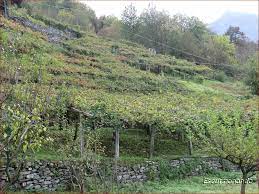
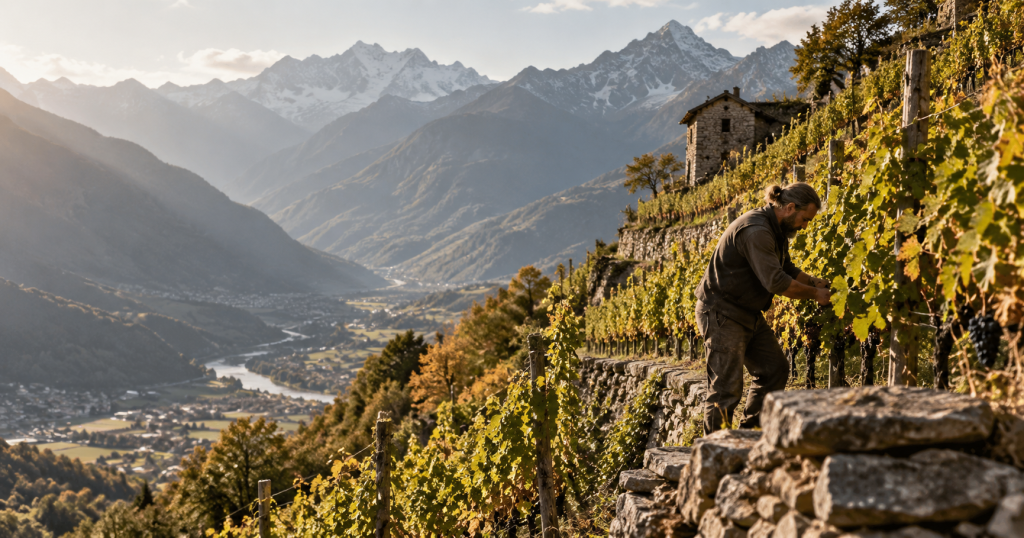
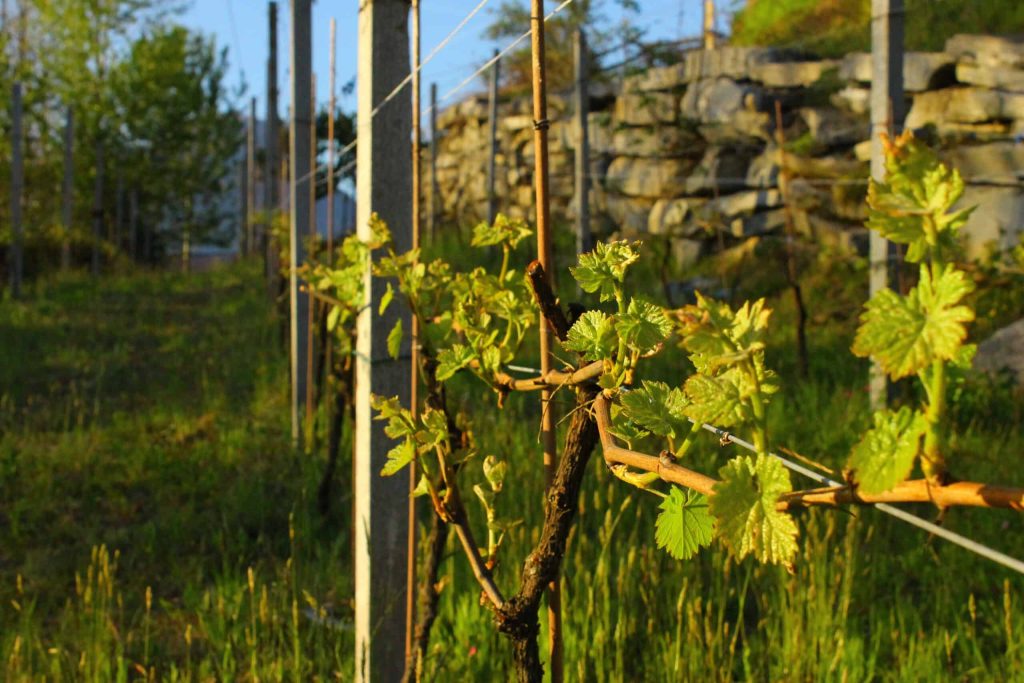
Speaking of heroic wine from the Val d’Ossola also means recalling an Alpine landscape marked by micro-vineyards, slopes and demanding work. During the tasting, however, the territory should not become an abstract suggestion: knowing the origin primarily helps to ask more precise questions of the wine and better understand its identity.
Discovering Prünent directly in the Val d’Ossola
Tasting at home is an excellent starting point, but comparison with the places of production adds perspective. To discover other wines from the winery, you can visit the official Edoardo Patrone website. Those wishing to get closer to the territory through a visit can also consult the page dedicated to tastings and experiences in the Val d’Ossola.
Sources and further reading
- Edoardo Patrone — Prünent Stella Valli Ossolane DOC Nebbiolo
- Edoardo Patrone — Prünent Stella technical sheet, 25 January 2026
- Azienda Agricola Edoardo Patrone — official website
- Regione Piemonte — DOCG and DOC wines with a designation of origin
- Regione Piemonte — Official Bulletin no. 19 of 2009
- National Association of Wine Cities — Valli Ossolane