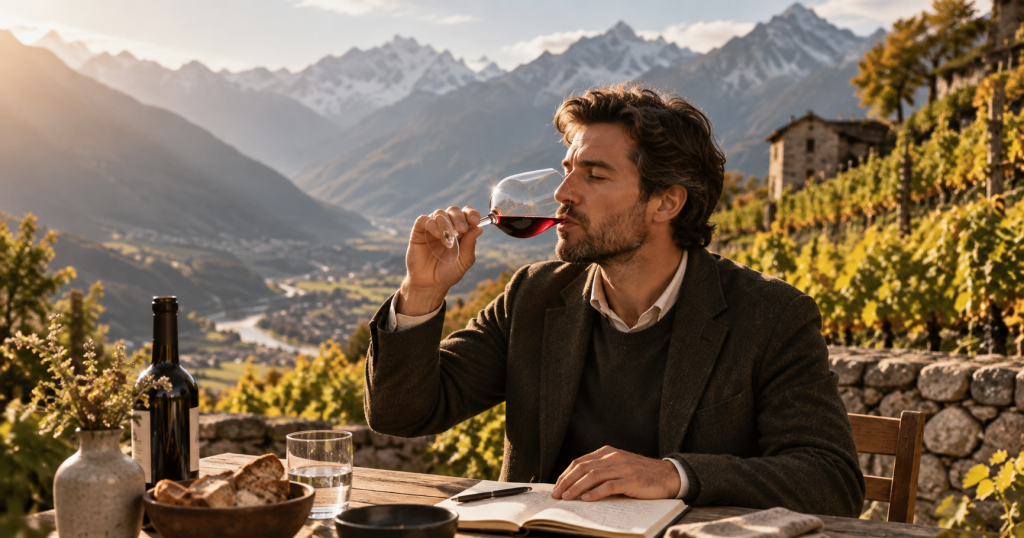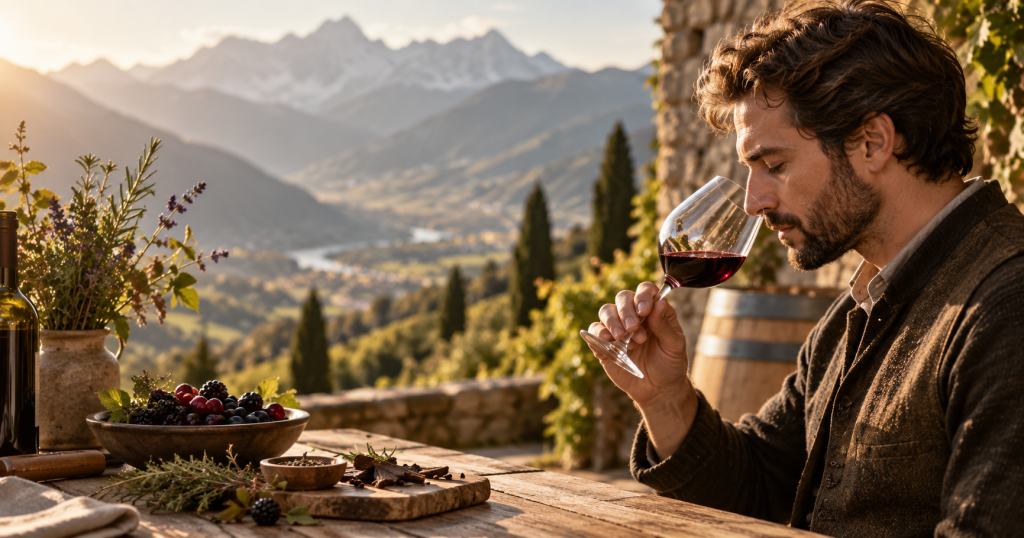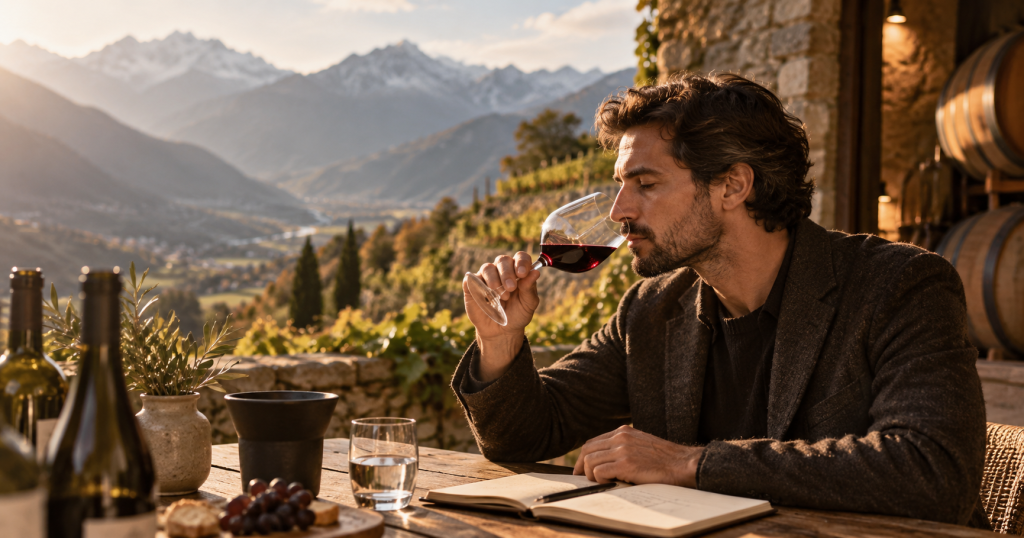
Alpine viticulture in Val d’Ossola is not an abstract concept: it is work on the land, slopes, microclimates and practical choices that change every year. Here we explain how vines are grown at altitude, what happens season by season, and what the main challenges and strategies adopted by small producers are.
Why alpine viticulture is different
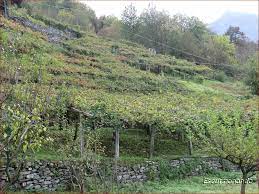
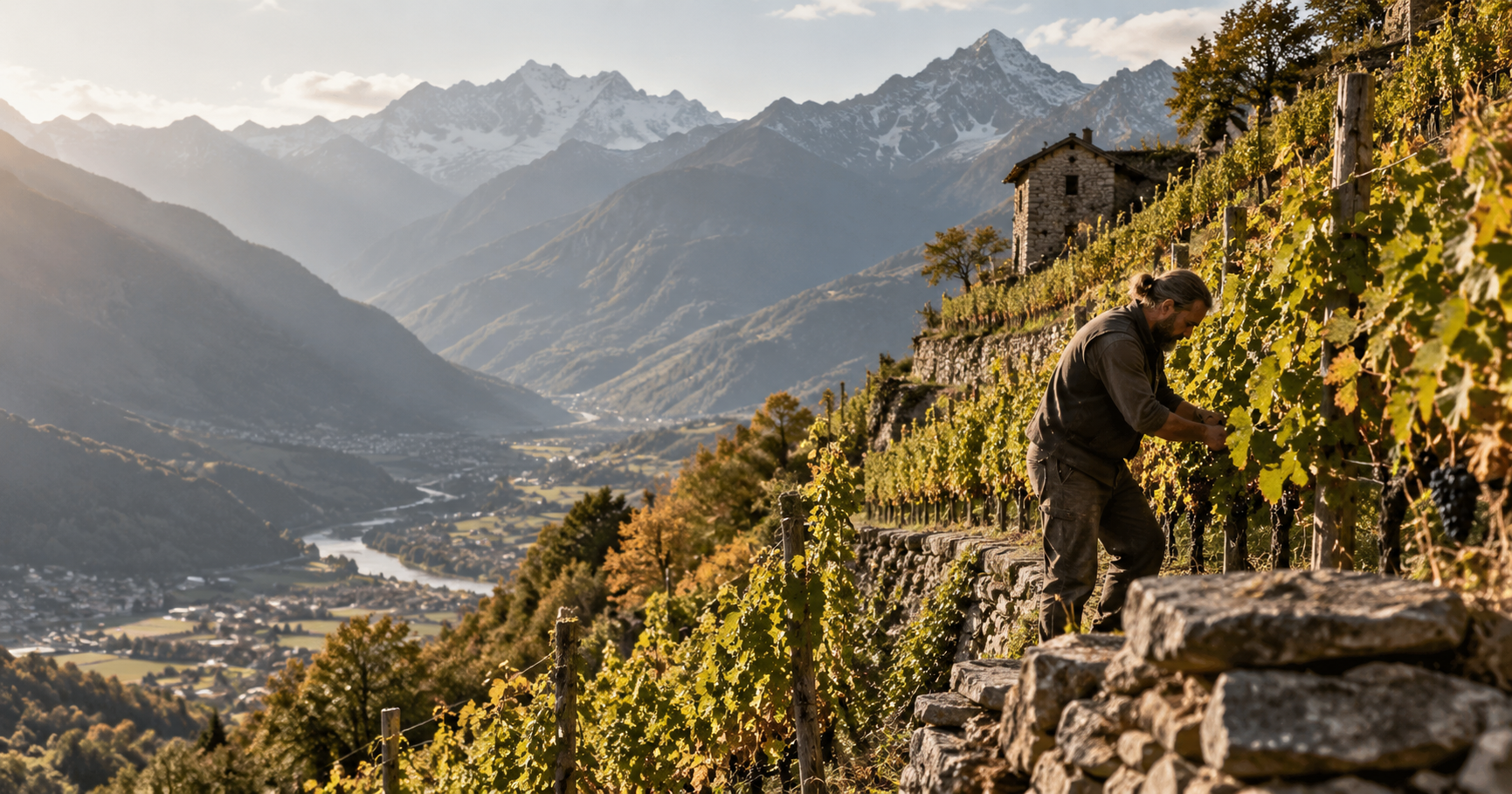
In the mountains, vines contend with marked temperature fluctuations, shorter seasons and often shallow or stony soils. This requires specific techniques: terraces or strips, dry-stone walls, narrow rows to limit erosion, and pruning designed to minimise the risk of spring frosts. Management is largely manual: mechanisation is limited or impossible on many slopes.
Growing calendar in Val d’Ossola: stages and practical considerations
- Late winter – awakening: checking posts, repairing walls, cleaning the rows. See also The awakening of nature in the vineyard.
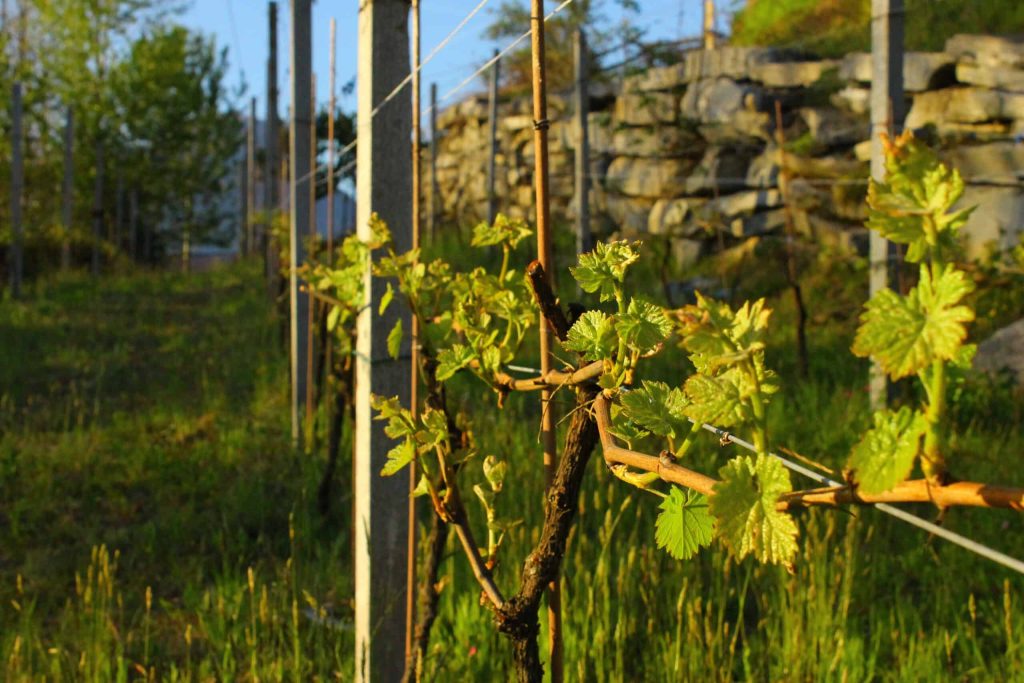
- Spring – budbreak and frost risk: shoots emerge earlier in warm years; the risk of late frosts makes protection techniques and pruning choices necessary. Learn more about Vine budbreak.
- Early summer – flowering and fruit set: monitoring to ensure regular fruit set. Any hailstorms require nets or prompt action. Read about Vine fruit set.
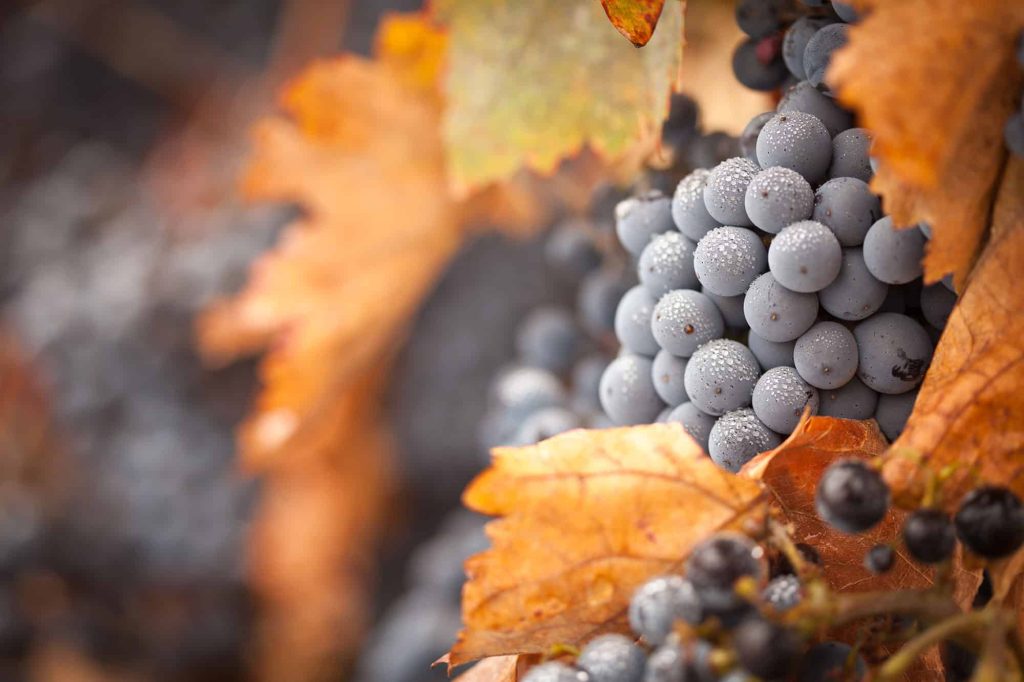
- Late summer – veraison and ripening: the day-night temperature range promotes aromas and acidity; ripening may be slower than in lower valleys. For technical details: Grape ripening.
- Autumn – harvest: often later and more selective; hand-picking makes it possible to choose the best bunches. See The harvest.
Practical techniques used in heroic vineyards
Viticulture at altitude requires practical solutions:
- Terraces, strips or dry-stone walls to stabilise the slope and enable work on foot.
- Low, sturdy training systems (cordon, short Guyot) to withstand the wind and reduce shoot exposure.
- Targeted pruning to regulate production and protect against spring frosts.
- Controlled, targeted plant protection: in small vineyards, integrated management and organic practices are often preferred to maintain biodiversity and healthy soil — a related topic in Organic wine: organic, biodynamic, natural. What are the differences?.
- Use of small-scale mechanisation (forklifts, motorised carts) and manual work for pruning, thinning and harvesting.
Maintaining heroic vineyards: what it involves
Maintenance is constant and physically demanding: reinforcing walls, checking drainage channels, replacing posts and wires, and pruning in often difficult conditions. Logistics are significant: transporting tools and grapes requires planning and often the help of specialised teams or small off-road vehicles.
How the mountains influence the character of Ossola wines
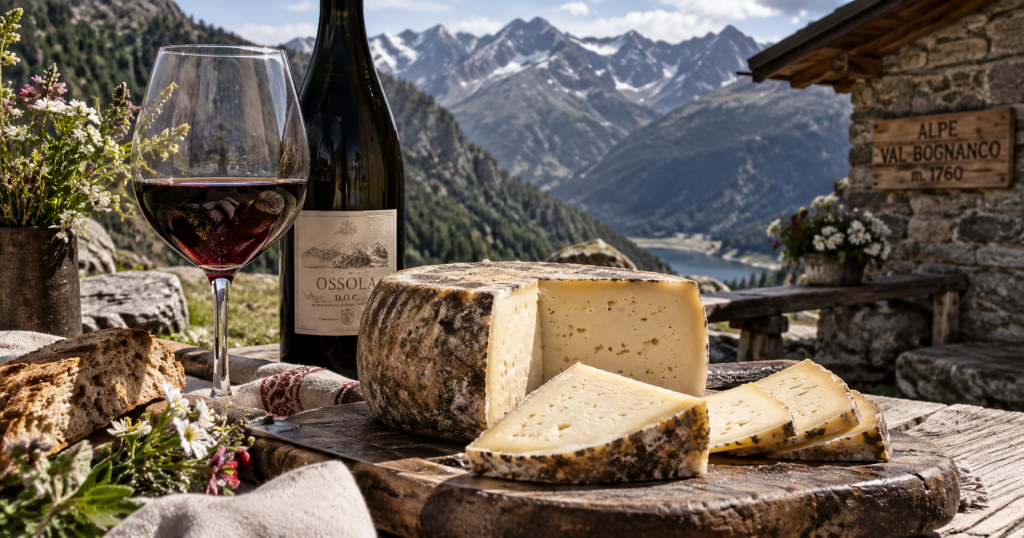
Alpine conditions leave clear traces in the wine. Pronounced temperature fluctuations and slow ripening preserve acidity and freshness. Shallow, mineral-rich soils, combined with generally low yields, encourage concentration and structure. In the case of Ossola Prünent/Nebbiolo, this translates into precise tannins, more restrained yet distinctive aromatic profiles, and a persistence that often benefits from ageing. For a practical tasting guide: How to taste Prünent.
Main challenges and practical strategies
- Frost and hail: nets, air propulsion or choices to remove/plant vines at different elevations are among the solutions adopted.
- Accessibility and costs: higher labour costs and limited mechanisation require organisation and often diversification of income (hospitality, direct sales, experiences).
- Climate change: seasonal variations require closer monitoring and experimentation with suitable varieties or rootstocks.
- Market and recognition: communicating the value of alpine viticulture is essential. Small producers focus on concrete stories of the area, traceability and guided tastings to help people understand why an Ossola wine is different.
Practical advice for visitors or those wishing to learn more
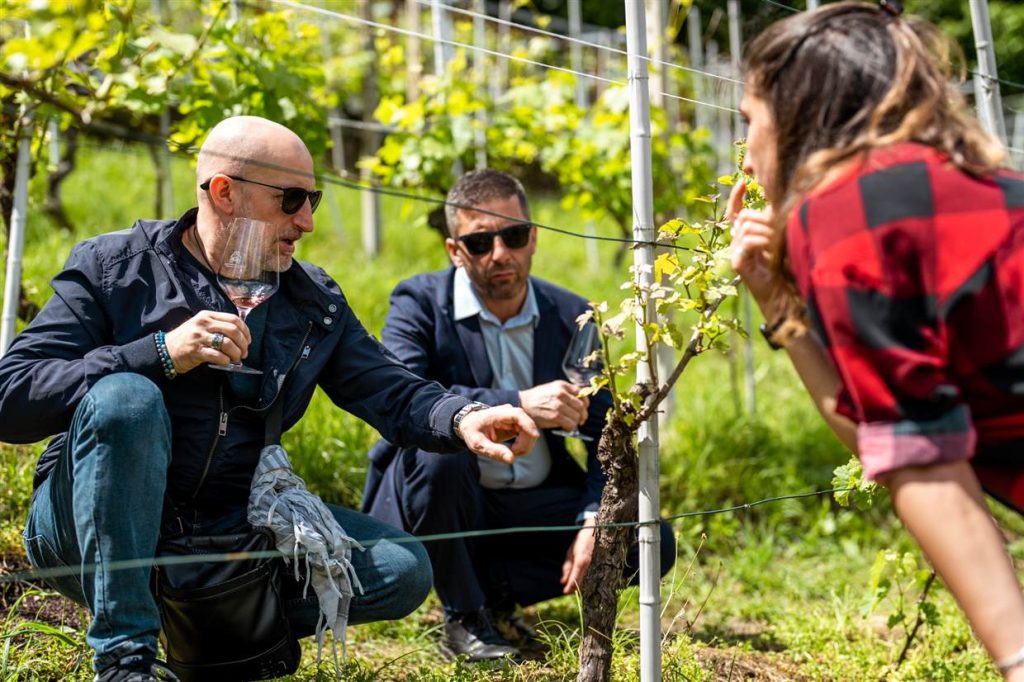
- If you come to Val d’Ossola, ask to see the vineyards: the difference between rows on the plains and on terraces is immediately apparent. Our history and the way we work are described in Our winery.
- To understand the connection between the area and its wine, find out about the Valli Ossolane DOC and take part in a guided tasting (see the link at the bottom).
- For industry professionals and restaurateurs: alpine viticulture is a distinctive feature to highlight on wine lists and in food-pairing proposals.
Further reading
If you are interested in hillside vineyards and heroic practices, also read Heroic viticulture and Heroic viticulture in Val d’Ossola.
Would you like to see for yourself how the area shapes our wines? Book your experience or Book a tasting at our winery in Domodossola.